Description
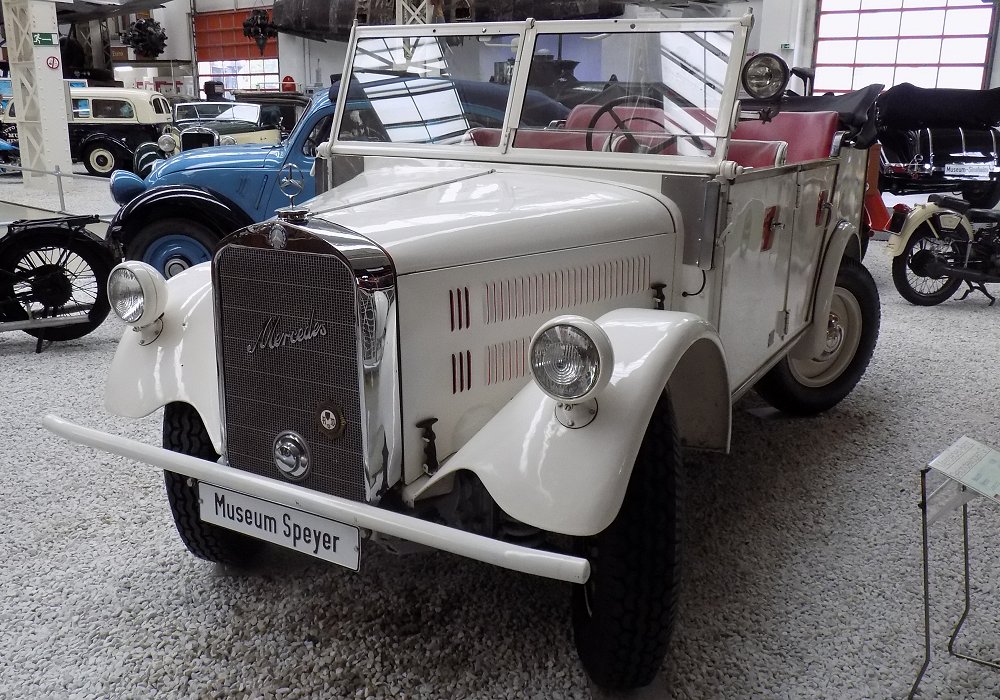
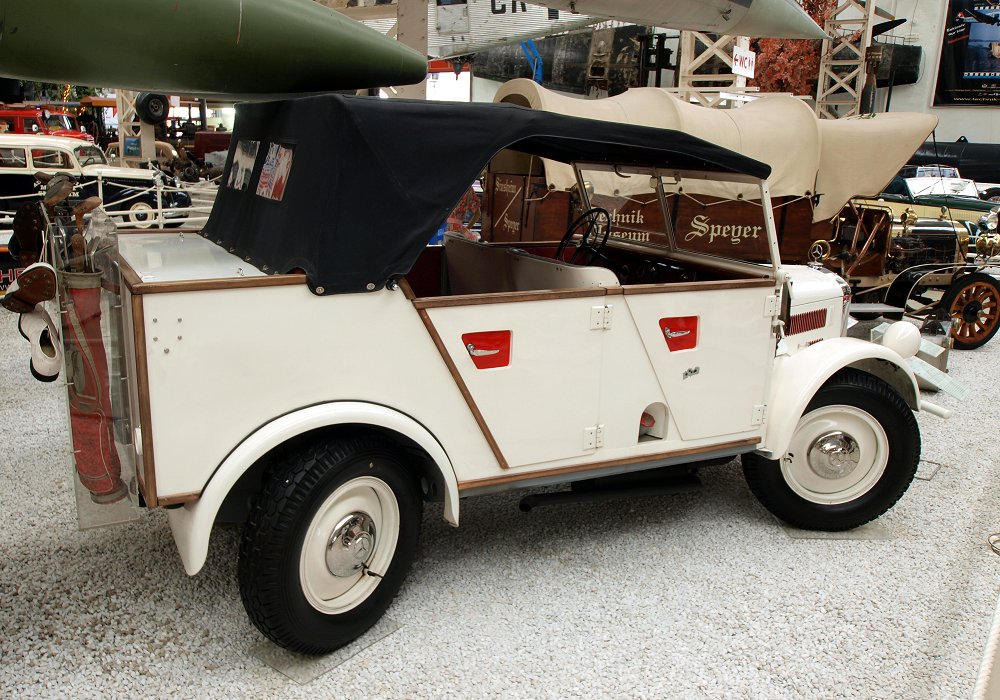
The Mercedes-Benz G5 was a compact and technically advanced off-road vehicle developed in the mid-1930s as part of Mercedes-Benz’s effort to supply modern, versatile transport for military and government use. Introduced in 1937 under the internal designation W152, the G5 was conceived as a light all-terrain vehicle capable of operating reliably on poor roads and rough ground, while remaining compact, agile and mechanically sophisticated. It represented a significant step in the evolution of multi-purpose off-road vehicles and foreshadowed later developments in four-wheel-drive utility design.
Power for the G5 came from a 2.0-litre inline-four petrol engine derived from Mercedes-Benz passenger-car units. Producing approximately 45 horsepower, the engine was modest in output but well suited to the vehicle’s role. It delivered smooth, tractable torque at low speeds, which was essential for off-road operation and convoy use. The engine was paired with a four-speed manual gearbox and a selectable four-wheel-drive system, allowing the driver to engage all-wheel traction when conditions demanded. This combination gave the G5 a level of mobility and flexibility that was advanced for its time.
One of the most distinctive features of the Mercedes-Benz G5 was its fully independent suspension on all four wheels. Unlike many contemporary military vehicles that relied on rigid axles, the G5 used independent suspension with coil springs, providing improved ride comfort, better wheel articulation and enhanced traction on uneven surfaces. This sophisticated setup allowed the vehicle to maintain contact with the ground more effectively, improving stability and control in off-road conditions. Combined with its relatively short wheelbase and compact dimensions, the suspension made the G5 surprisingly capable across a wide range of terrain.
The chassis was a strong yet lightweight ladder-frame construction designed to balance durability with mobility. The four-wheel-drive system was engineered for reliability rather than complexity, and braking was handled by drum brakes on all four wheels. Steering was precise for a vehicle of its type, aiding manoeuvrability in confined spaces and on narrow tracks. Overall, the mechanical layout reflected Mercedes-Benz’s emphasis on engineering refinement, even in utilitarian applications.
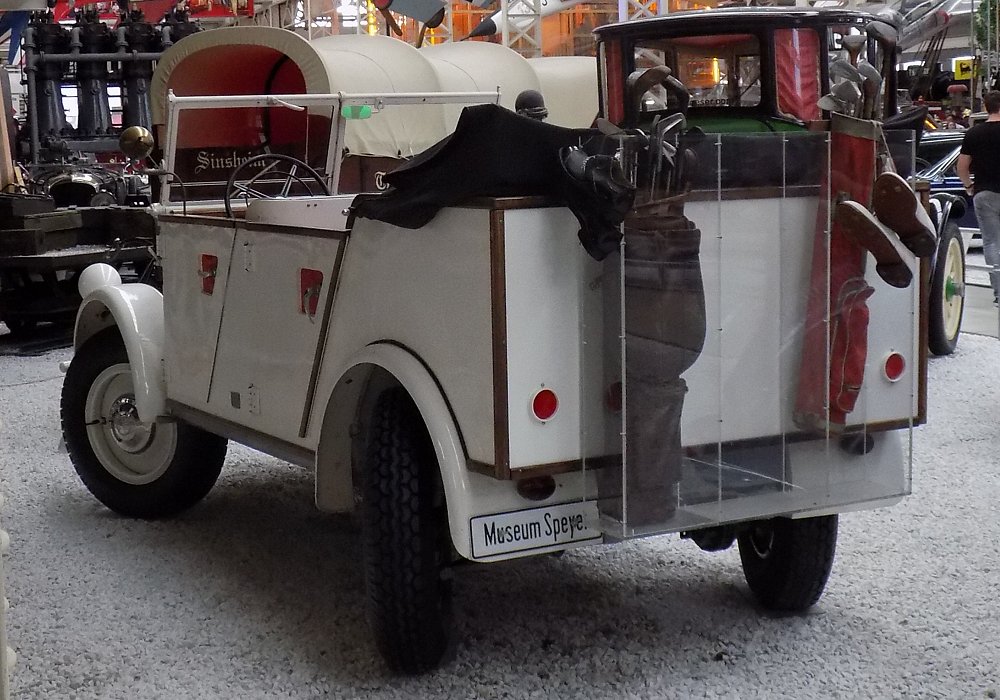
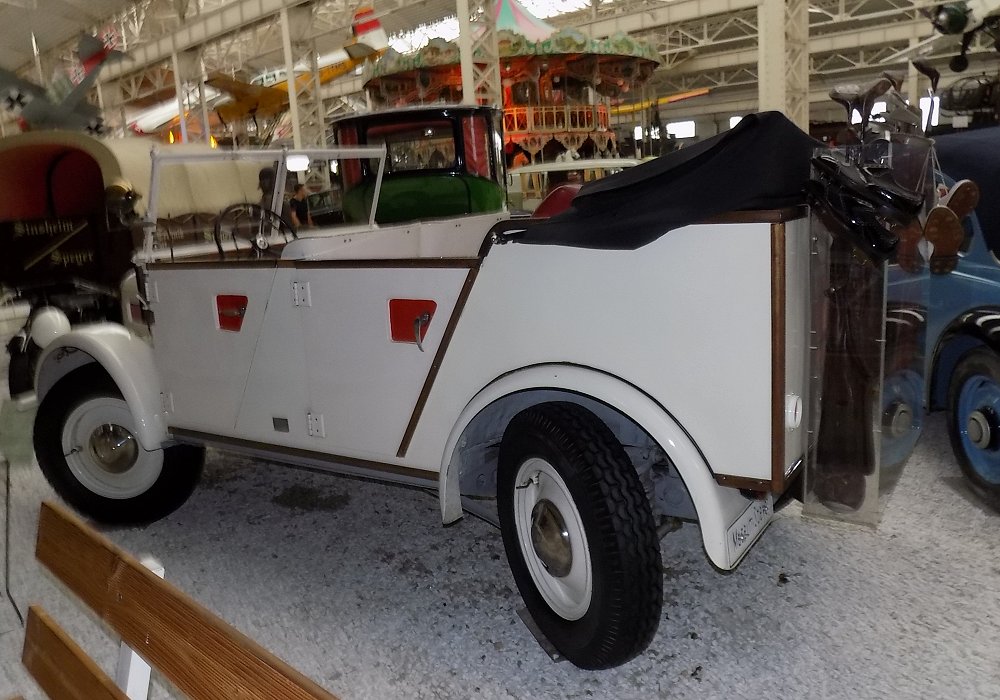
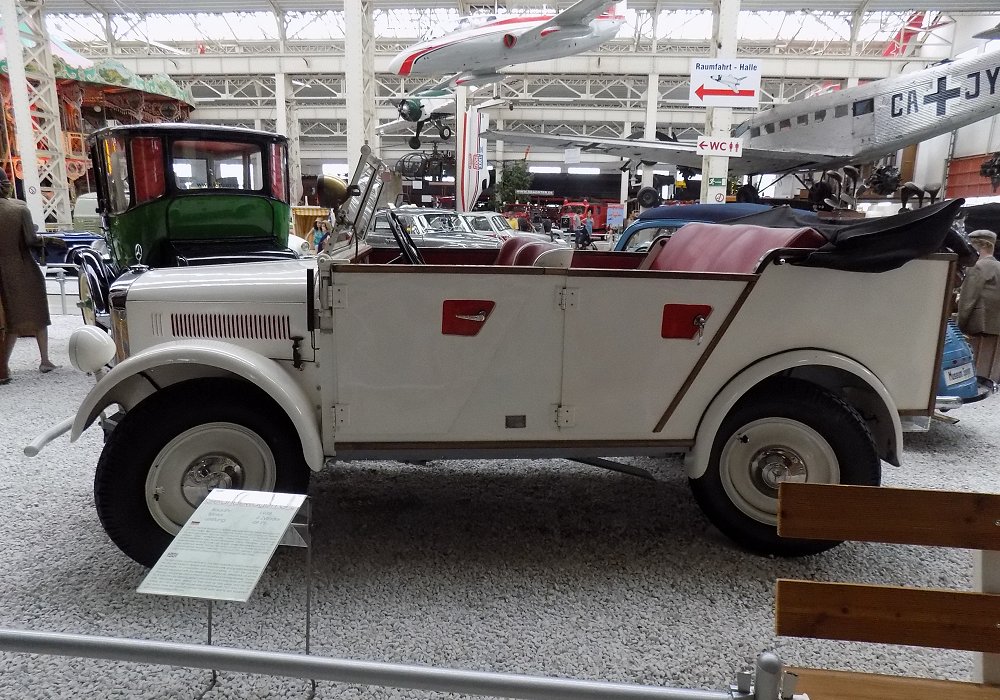
Bodywork on the G5 was functional and straightforward, typically configured as a four-door open tourer with a folding fabric roof. This layout allowed easy access for occupants and flexibility for different roles, including staff transport, liaison duties and light cargo carrying. The design featured flat body panels, exposed wheels and minimal ornamentation, prioritising ease of manufacture and maintenance. Some variants were fitted with additional equipment or modified bodies to suit specific operational requirements.
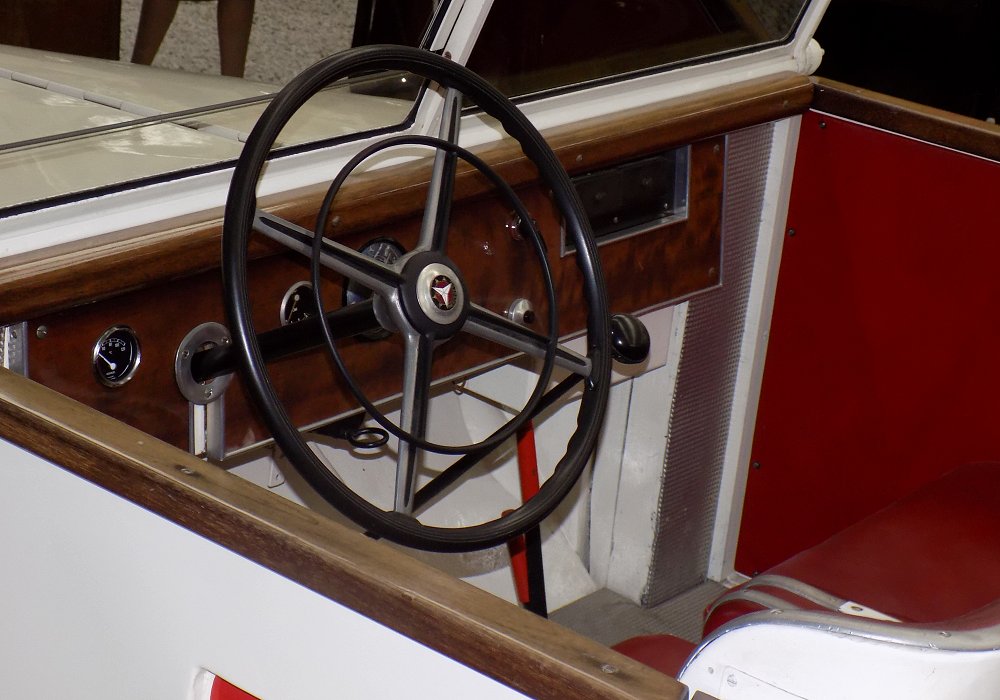
Inside, the G5 offered a simple but well-organised interior. Seating was upright and practical, designed to accommodate occupants in uniform or work clothing. Upholstery was basic and durable, and the dashboard featured clear, essential instrumentation focused on engine operation and vehicle speed. Controls were logically arranged and easy to use, reflecting the vehicle’s intended role as a working tool rather than a comfort-oriented passenger car. Despite its utilitarian nature, build quality remained high, consistent with Mercedes-Benz standards of the period.
In service, the Mercedes-Benz G5 proved to be capable and reliable, particularly in roles that required mobility over mixed terrain. Its independent suspension and four-wheel drive gave it an advantage over many contemporaries on rough ground, while its compact size made it easier to handle than larger multi-axle vehicles such as the G4. However, the complexity and cost of its advanced suspension system limited large-scale production, and it was ultimately overshadowed by simpler, more economical designs better suited to mass military deployment.
Production of the G5 was relatively limited, with only a small number built between 1937 and 1939. As military priorities shifted toward vehicles that could be produced quickly and in large numbers, the G5’s sophisticated engineering became a disadvantage rather than a benefit. Nevertheless, it remained an important developmental step in Mercedes-Benz’s exploration of all-terrain vehicle design.
Today, the Mercedes-Benz G5 is regarded as a rare and historically significant off-road vehicle. It stands out for its advanced independent suspension and refined engineering at a time when most military vehicles were far more rudimentary. Surviving examples are highly prized by collectors and historians, valued not for performance or luxury, but for their role in shaping the evolution of four-wheel-drive vehicles and for illustrating Mercedes-Benz’s commitment to technical innovation even in utilitarian applications.