Description
The Mercedes-Benz SS 710 was one of the most powerful and prestigious variants within the SS (Super Sport) line, representing the height of Mercedes’ engineering capabilities during the late 1920s and early 1930s. Introduced as a high-output development of the standard SS, the 710 designation referred to the engine’s approximate swept volume in decilitres: a 7.1-litre supercharged inline-six. This model stood at the intersection of luxury and competition-level performance, embodying the bold, dramatic engineering spirit that defined Mercedes’ great supercharged era.
At the heart of the SS 710 was its 7.1-litre inline-six engine, equipped with the marque’s mechanical Roots-type Kompressor. In normal running the engine produced roughly 170 horsepower, already exceptional for the time. When the supercharger was engaged—triggered by fully depressing the accelerator—the output surged to approximately 225 horsepower. This massive burst of power transformed the car’s performance, giving it fierce acceleration and enabling sustained high-speed motoring that few contemporary road cars could match. The distinctive supercharger whine and the deep growl of the big six became signature traits of the SS 710 driving experience.
The chassis was a further evolution of the Mercedes S platform, heavily reinforced to cope with the larger engine and greater torque loads. Retaining the ladder-frame design, it sat lower and more rigid than earlier models, improving stability and handling at high speed. The suspension used semi-elliptic leaf springs both front and rear, tuned to provide a controlled and sporting ride suitable for fast touring and competition. Four-wheel mechanical drum brakes, among the most advanced braking systems of the period, offered the stopping capability necessary for a car of such size and power.
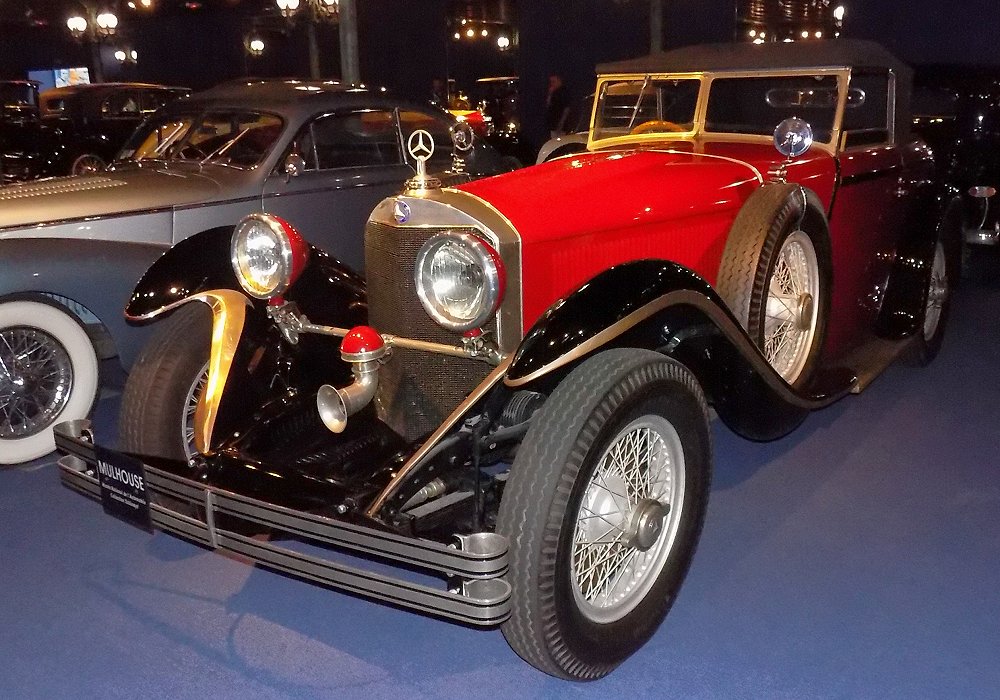
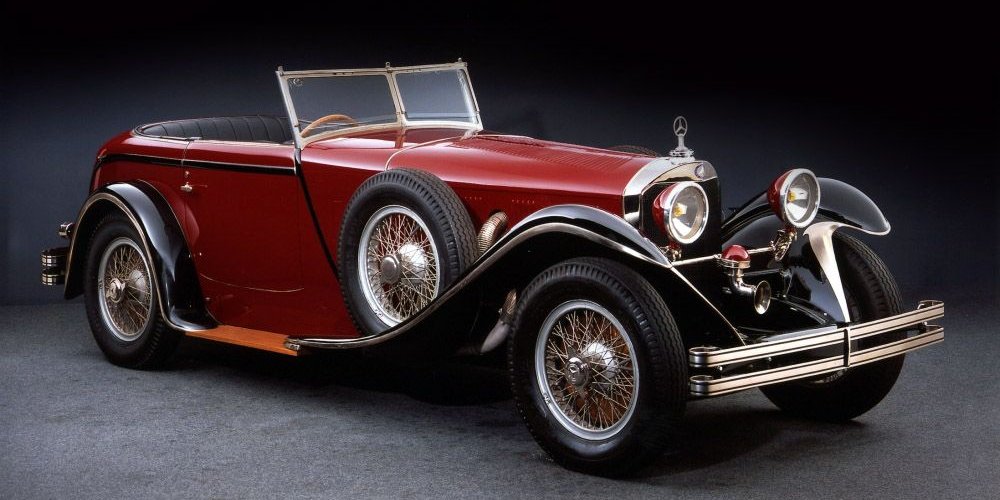
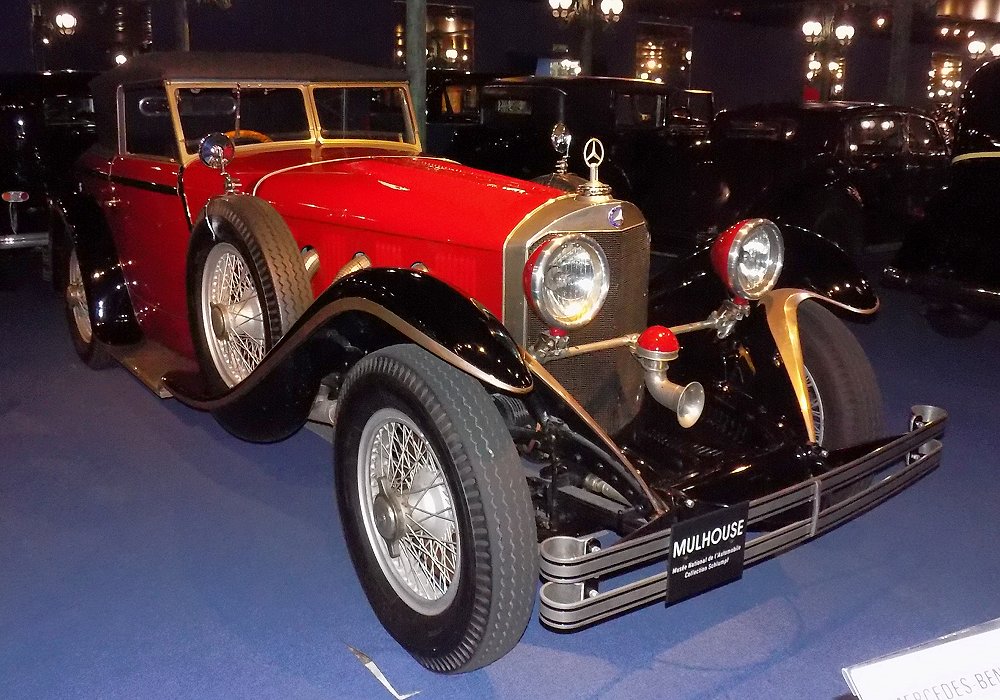
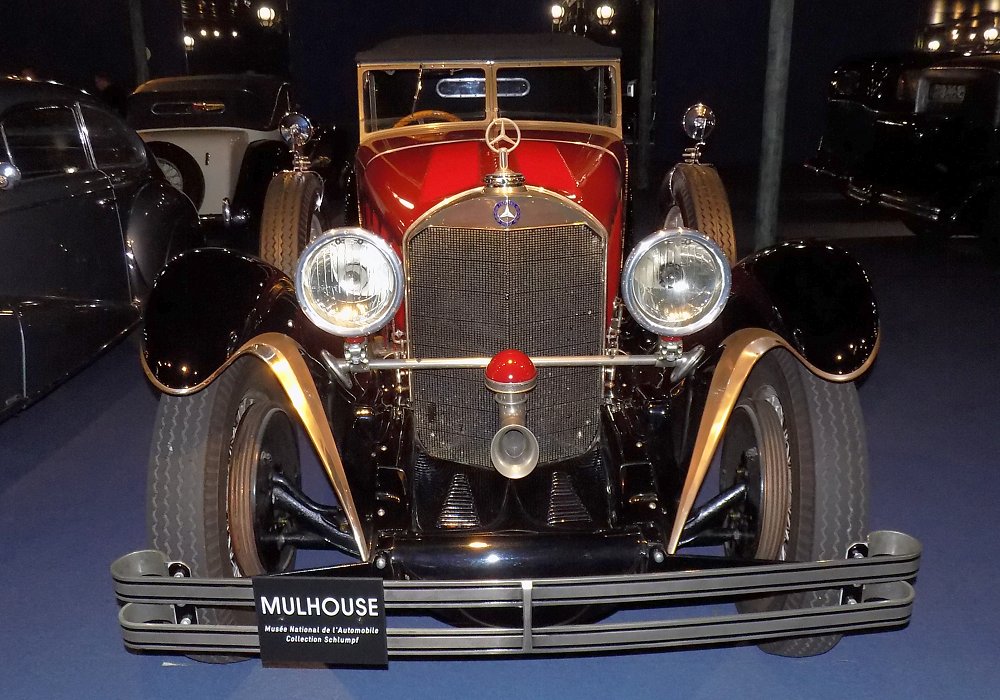
The bodywork of the SS 710 varied because Mercedes supplied the chassis to many leading coachbuilders and also produced bodies through its own Sindelfingen works. Typical styles included open sports tourers, lightweight competition bodies and luxurious cabriolets. The long bonnet, upright radiator, pronounced external exhaust pipes and large wire-spoke wheels gave the SS 710 an unmistakable presence. Lightweight sporting bodies, often chosen by privateer racers, emphasised agility and performance, while more elaborate cabriolets showcased the luxury side of the model with fine trim, polished wood and elegant detailing.
Inside, the car maintained a balance between sporting functionality and luxury. The dashboard carried a full array of mechanical instruments, including oil pressure, water temperature, fuel gauge, speedometer and supercharger indicator. Seats were typically trimmed in high-quality leather, with bucket-style chairs for sporting variants and more comfortable arrangements for grand touring models. The driving position was commanding, with a large steering wheel, long gear lever and a clear view over the expansive bonnet.
On the road, the Mercedes-Benz SS 710 was nothing short of formidable. With the supercharger disengaged, it delivered smooth, deep torque ideal for relaxed cruising. Once the Kompressor was activated, the character changed dramatically: acceleration became forceful and immediate, and the car could maintain high speeds with remarkable ease. Despite its size, the strengthened chassis and firm suspension gave the SS 710 confidence through corners, while the large brakes provided crucial control during demanding driving. It excelled both as a high-performance touring machine and as a competition contender.
In motorsport, the SS 710 delivered impressive results in hillclimbs, long-distance rallies and endurance events. Its combination of power, reliability and strong braking made it a favourite among drivers who needed a car with both speed and stamina. The SS 710’s success on the competition stage directly contributed to the development of the shorter, lighter SSK and the even more extreme SSKL, which would go on to dominate early 1930s racing.
Today, the Mercedes-Benz SS 710 is recognised as one of the most desirable pre-war performance cars. Surviving examples are rare, and their blend of engineering excellence, dramatic styling and historical significance makes them highly prized among collectors. The SS 710 remains a defining expression of Mercedes’ early supercharged technology—a grand, powerful and technically advanced machine that embodied the golden age of German high-performance motoring.