Description
The Mercedes-Benz SS Sport was a focused, performance-oriented version of the already formidable SS (Super Sport) series, introduced in 1928. While the standard SS could be configured as a luxurious grand tourer, the SS Sport was developed with more explicit emphasis on high-speed road performance, competition use and dynamic handling. It represented a key step between the powerful Mercedes S and the even more extreme SSK, blending speed, endurance and sporting agility into one of the most capable performance cars of the late 1920s.
The SS Sport shared the same 7.1-litre inline-six engine used across the SS range, equipped with Mercedes’ mechanically driven Roots-type Kompressor. In normal running the engine produced around 170 horsepower. When the supercharger engaged—triggered by flooring the accelerator and activating a mechanical clutch—the output climbed to roughly 225 horsepower. This surge in performance gave the SS Sport fierce acceleration and a deep, forceful engine note that became synonymous with the S-Series. The instant torque made the car exceptionally strong on hills and when exiting tight corners, ensuring it remained competitive in both road racing and hillclimb events.
The chassis of the SS Sport was a refined and more dynamic evolution of the Mercedes S platform. It retained the reinforced ladder-frame structure but was lowered further to improve stability and centre of gravity. Suspension used semi-elliptic leaf springs at all four corners, tuned with a firmer sporting bias. The wheelbase remained the same length as the standard SS, but the overall stance felt tighter and more planted. Large mechanical drum brakes on all four wheels gave the SS Sport powerful stopping capability for the era, allowing drivers to control the car confidently even in demanding alpine or competition conditions.
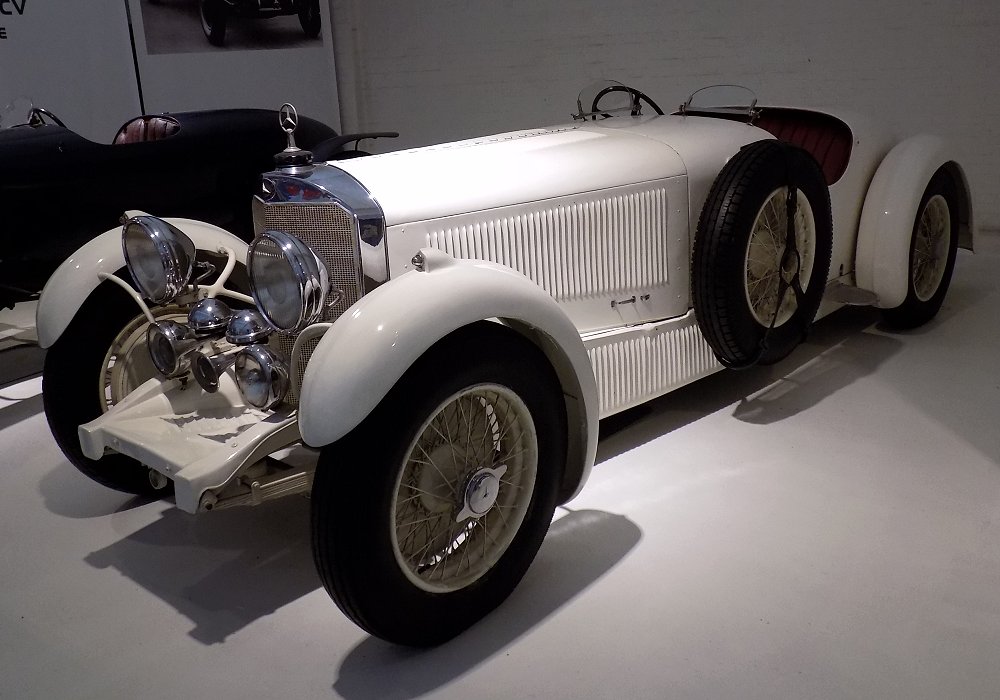
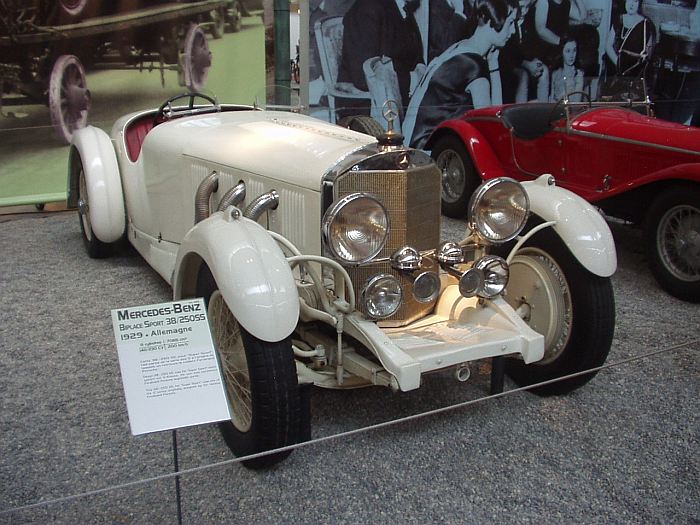
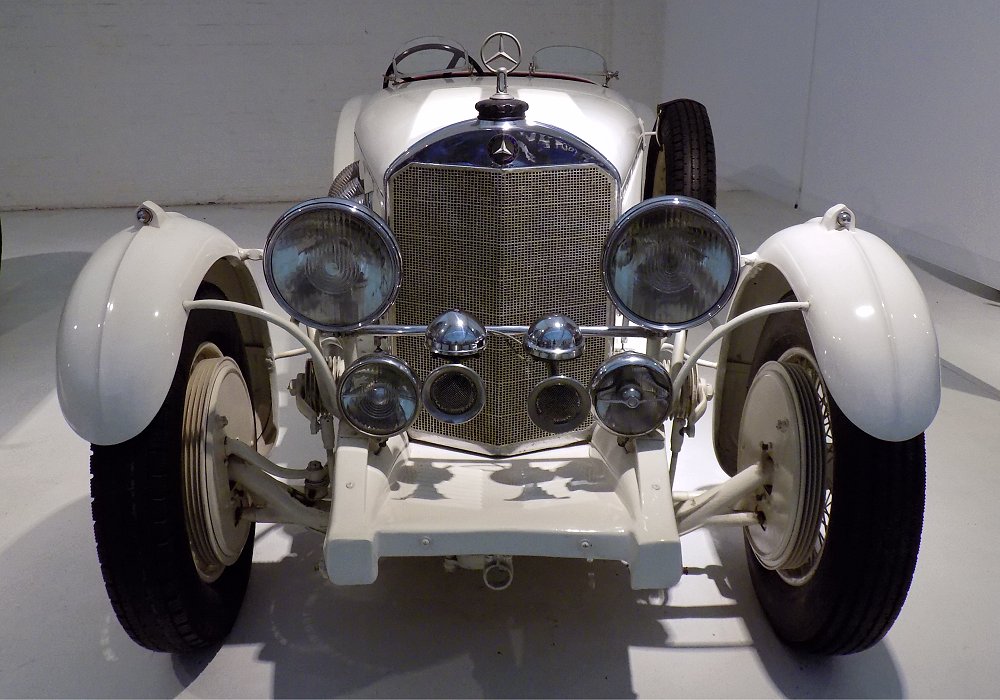
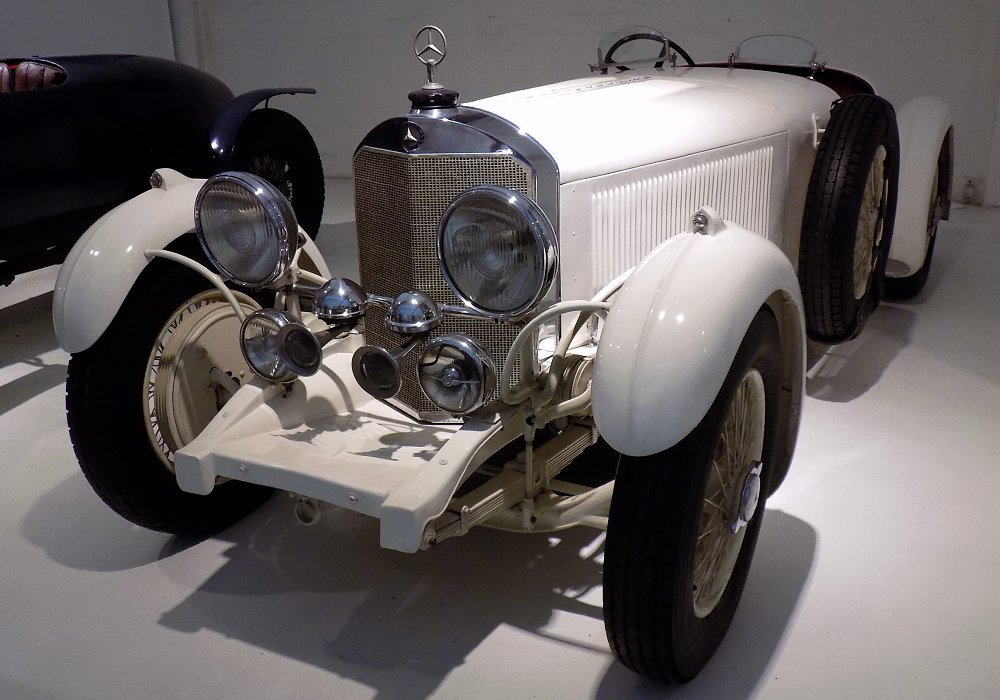
Bodywork played a major role in the SS Sport’s character. While luxurious cabriolets were sometimes built, the typical specification was a lightweight open sports tourer with minimal trim, low sides, a compact rear deck and the signature long bonnet stretching out ahead of the driver. External exhaust pipes, large wire-spoke wheels and exposed mechanics emphasised the car’s performance nature. The overall appearance was muscular, aggressive and purposeful, making the SS Sport instantly recognisable. Its reduced weight compared with more opulent SS configurations improved responsiveness, braking and acceleration.
The interior of the SS Sport reflected the car’s focus on driving rather than luxury. Sports seats were trimmed in leather, with a dashboard that featured Mercedes’ clear mechanical instrumentation: oil pressure, water temperature, speedometer, rev indicator and the distinctive Kompressor warning light. The steering wheel was large for leverage, and the long gear lever connected the driver directly to the heavy-duty gearbox. The cabin lacked the plush carpets or elaborate woodwork seen in chauffeur-driven bodies, instead offering a purposeful layout designed to enhance driver engagement.
On the road, the SS Sport delivered a thrilling experience. At low speeds and normal throttle the car behaved with refinement, benefitting from the immense torque of its large engine. But once the Kompressor engaged, the SS Sport transformed into a raw and urgent performance machine. Acceleration was shockingly strong for its time, and the car could sustain high speeds over long distances thanks to its robust cooling system and powerful drivetrain. The lowered chassis, firmer suspension and large brakes allowed the driver to exploit this performance with more confidence than in the heavier, more luxurious SS body styles. The SS Sport excelled on fast, open roads and especially in mountainous regions where its balance of power and control came into its own.
In motorsport, the SS Sport formed the backbone of Mercedes’ competition efforts before the arrival of the SSK. It achieved notable success in hillclimbs, road races and multi-stage endurance events such as the Alpine Trials. Drivers valued its combination of speed, braking power, reliability and stamina. The knowledge gained from these competition outings directly informed the development of the SSK and the later SSKL, both of which would go on to dominate early 1930s racing.
Today, the Mercedes-Benz SS Sport is regarded as one of the purest and most exciting expressions of the early Kompressor era. Its blend of dynamic handling, dramatic styling and supercharged power makes it one of the most desirable variants of the SS range. Surviving examples are rare and command immense respect among collectors, representing the moment when Mercedes forged the DNA that would define its greatest pre-war sporting machines.