
Description
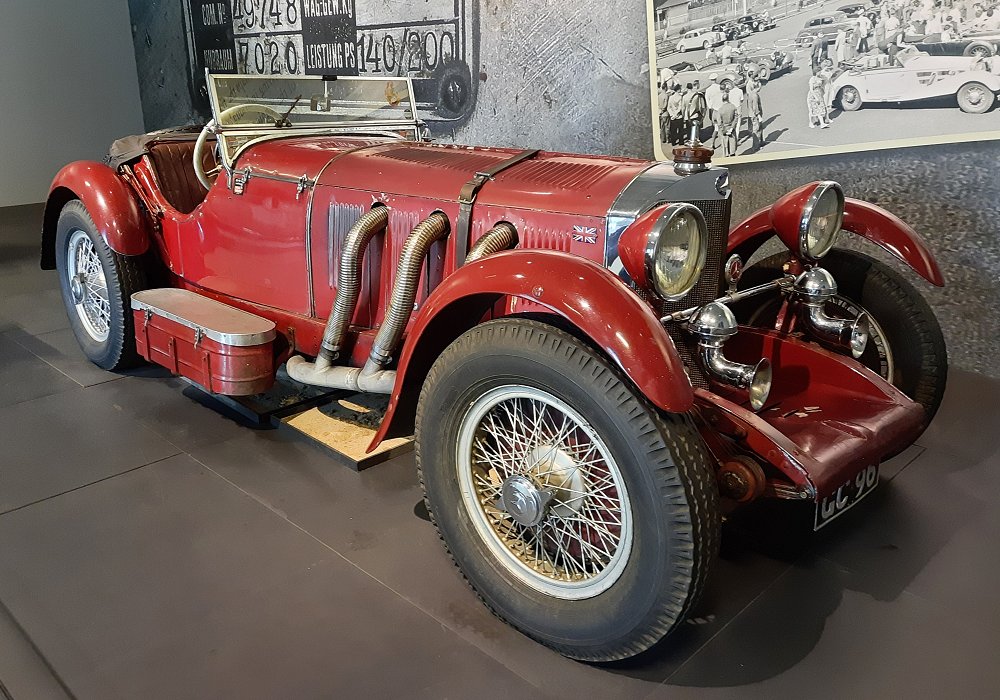
The Mercedes-Benz SSK 27/140/200 PS was the most famous and extreme member of the pre-war S-Series, a short-wheelbase, supercharged sports machine that became one of the defining icons of 1920s and early 1930s high-performance motoring. Introduced in 1928, the SSK (short for Super Sport Kurz, meaning Super Sport Short) was created by reducing the wheelbase of the Mercedes SS chassis and tuning the supercharged six-cylinder engine for even greater output. The result was a car of immense power, aggressive handling character and formidable competition ability. It became closely associated with the exploits of Rudolf Caracciola, who used the SSK to win hillclimbs and road races across Europe.
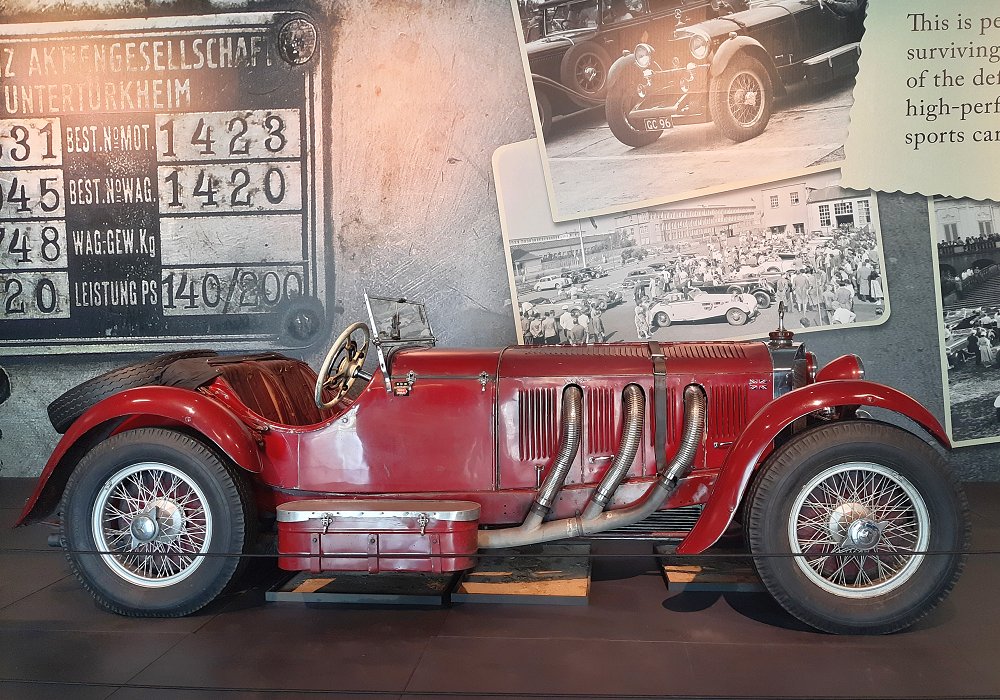
The designation 27/140/200 PS followed the German system of the era. The first figure, 27, reflected the tax horsepower. The second, 140, indicated the engine’s normal power output without the supercharger. The third, 200, represented the approximate power achieved when the Kompressor was engaged. The engine itself was a 7.1-litre inline-six fitted with Mercedes’ mechanically driven Roots-type supercharger. When running without the blower the car already offered strong torque, but once the driver fully depressed the accelerator the supercharger engaged and transformed the car’s personality. Power surged sharply, accompanied by the unmistakable high-pitched whine of the Kompressor. In this mode the SSK became one of the fastest road-going cars of its age.
The mechanical layout of the SSK was focused entirely on performance. The shortened chassis reduced the wheelbase significantly compared with the SS, improving cornering agility and making the car more responsive in competition. This shorter frame also reduced weight, which helped acceleration, braking and high-speed stability. The ladder-frame structure was strengthened to cope with the tremendous torque of the supercharged engine. Suspension remained by semi-elliptic leaf springs front and rear, tuned firmly to handle aggressive driving. The large mechanical drum brakes, among the most capable of their time, provided essential stopping power for a machine of this performance level.
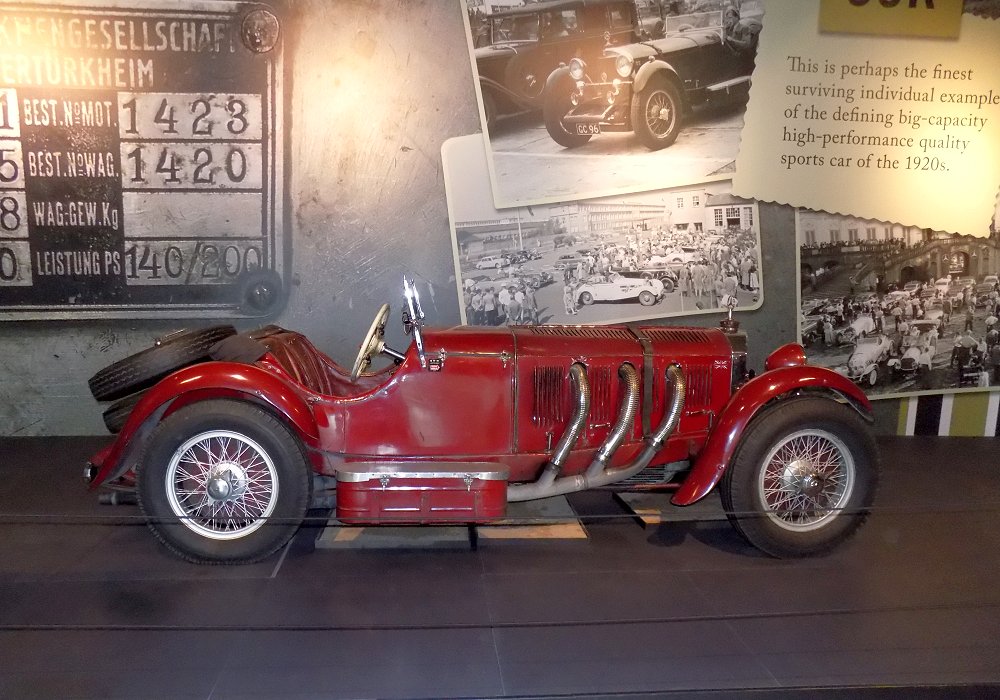
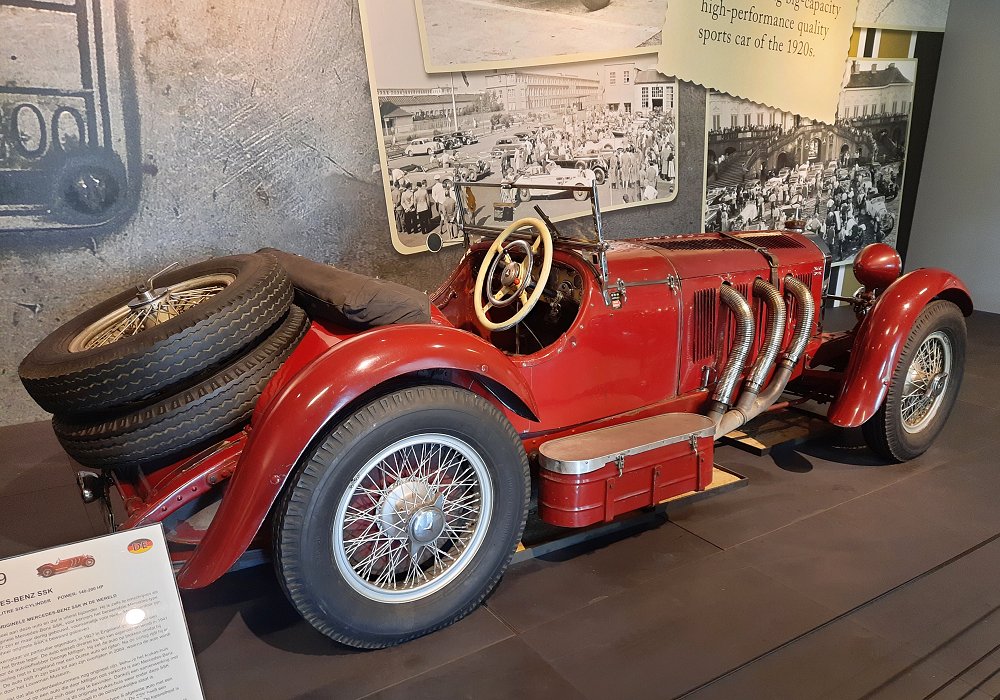
Styling on the SSK varied depending on the coachbuilder, but most examples followed the same purposeful sporting theme. The long bonnet dominated the proportions, stretching far ahead of a compact two-seat cockpit positioned close to the rear axle. Exposed exhaust pipes exited along the right side of the car, signalling both the power beneath and the sporting intent. The wings were narrow and functional, with minimal bodywork to keep weight down. The rear end was short and cleanly cut, often carrying a single spare wheel. The overall impression was that of a stripped-back racing machine adapted just enough for road use.
Inside, the SSK was thoroughly purposeful. The cockpit was tight and lacked unnecessary comfort features. Leather bucket seats provided support rather than luxury, the dashboard carried essential instruments arranged for clarity, and the large steering wheel and long gear lever offered direct mechanical engagement. This was not a touring car; it was a focused driver’s machine with minimal concessions to refinement.
On the road the Mercedes-Benz SSK delivered an experience unmatched in its era. Without the supercharger the car pulled strongly and smoothly on its vast reserves of torque. But with the blower engaged, the car became exceptionally fast, surging forward with a level of acceleration that astonished contemporary observers. The shortened chassis made the SSK far more agile than the SS, although it also demanded skill: it could be lively, even unruly, when pushed to the limit. For a capable driver, however, it offered an extraordinary blend of power, speed and control. Its brakes and cooling system were strong enough to sustain long hard runs over mountain passes or demanding competition stages.
The SSK quickly established itself as a dominant force in motorsport. Rudolf Caracciola achieved numerous victories in hillclimbs and endurance events driving the SSK, and the model soon developed an enviable reputation across Europe. Its combination of immense power, mechanical robustness and nimble handling made it a formidable competitor in both works and privateer hands. The SSK was later further refined into the even lighter and more extreme SSKL, which continued the car’s winning legacy.
Today, the Mercedes-Benz SSK 27/140/200 PS is regarded as one of the greatest and most desirable pre-war sports cars ever built. Its rarity, legendary status and historical importance make surviving examples extraordinarily valuable. More than just a powerful machine, the SSK embodies the spirit of Mercedes’ golden era of supercharged performance: aggressive, technically advanced and built with uncompromising purpose. It remains a masterpiece of early high-performance engineering and one of the most charismatic supercharged sports cars ever produced.