Description
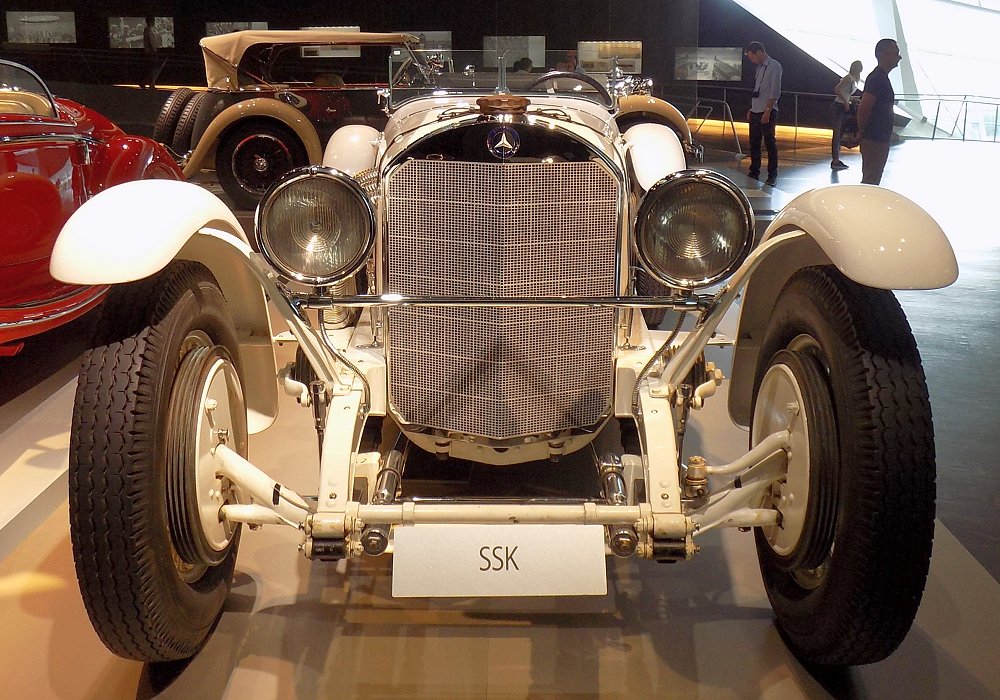
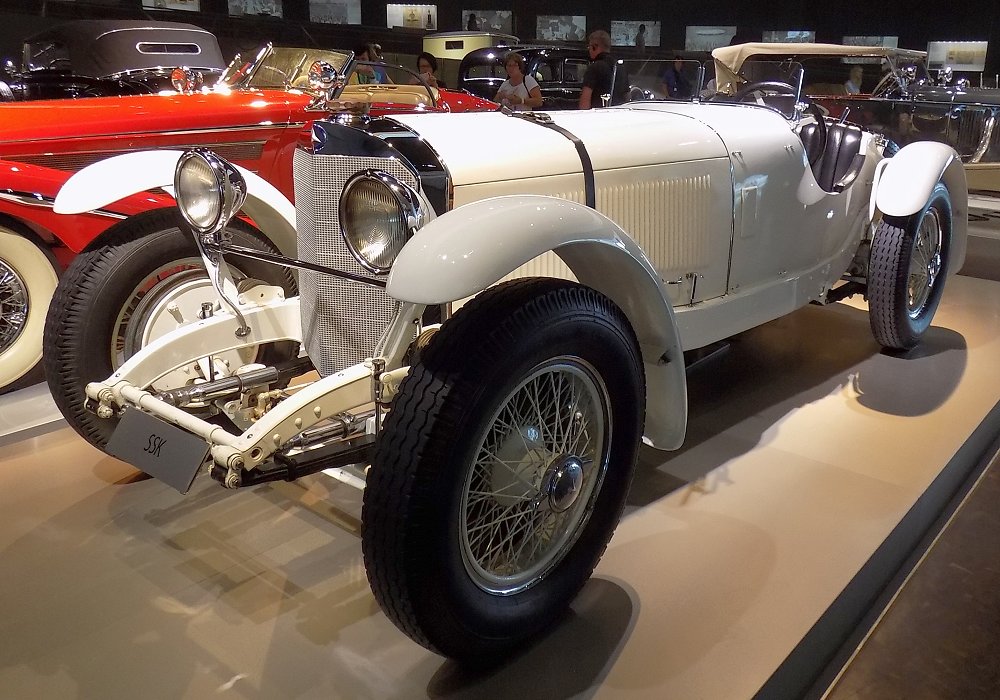
The Mercedes-Benz SSK 27/170/225 PS was one of the most powerful and celebrated versions of the short-wheelbase SSK line, representing the peak of Mercedes’ pre-war supercharged engineering before the arrival of the even more extreme SSKL. Introduced in the late 1920s, this higher-output specification took the already formidable SSK and tuned it for even greater speed, torque and competitive ability. It was a car built for skilled drivers, for hillclimbs, long-distance road races and fast Alpine touring, and it became one of the defining legends of early high-performance motoring.
The designation 27/170/225 PS followed the German power-rating convention of the time. The first figure was the tax horsepower. The second, 170, indicated the power developed by the 7.1-litre inline-six engine in normal, un-supercharged running. The third, 225, represented the approximate output when the mechanical supercharger—Mercedes’ Kompressor system—engaged under full throttle. This forced-induction surge made a dramatic difference: the car leapt forward with sudden urgency, accompanied by the unmistakable whine of the Roots-type blower and a deeper, more aggressive exhaust note. Few road-going cars of the era could match the SSK’s acceleration or its ability to maintain high speed for sustained periods.
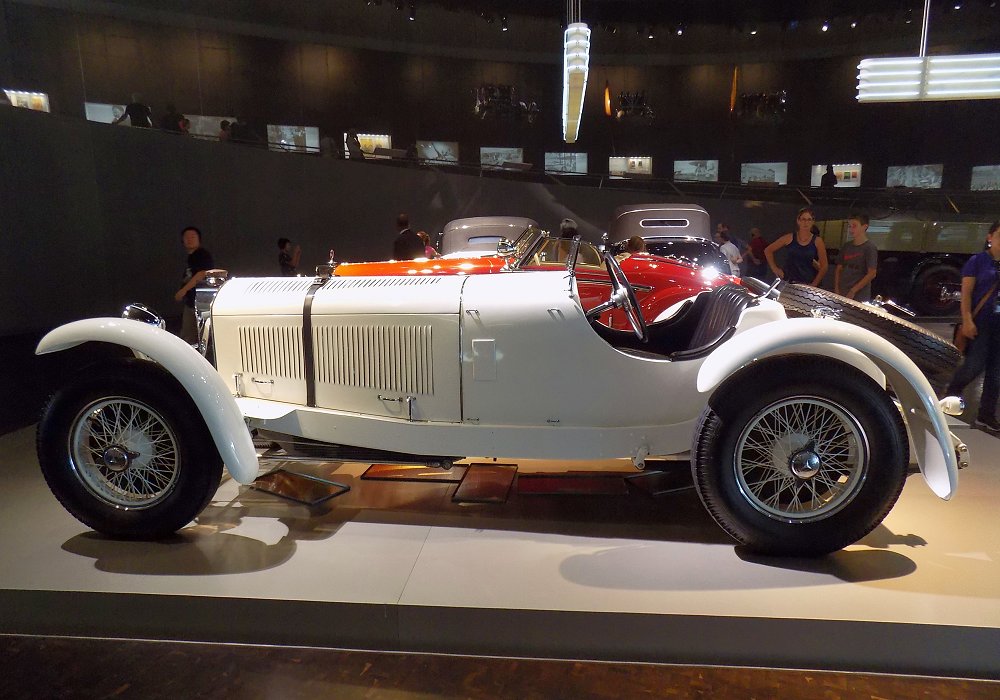
The SSK 27/170/225 PS used the shortened Kurz chassis that defined the SSK name. This truncated ladder frame, significantly shorter than the SS, brought improved agility and reduced weight. The layout placed the cockpit far back, creating the iconic long-bonnet, short-tail proportions. The stronger frame and lower centre of gravity allowed the car to cope with the extraordinary torque delivered by the supercharged engine. Suspension retained the firm, competition-tuned semi-elliptic leaf springs front and rear, giving the car a taut, responsive feel on winding roads and a stable stance at high speed. Large mechanical drum brakes on all four wheels provided the stopping power needed for serious mountain driving and competitive use.
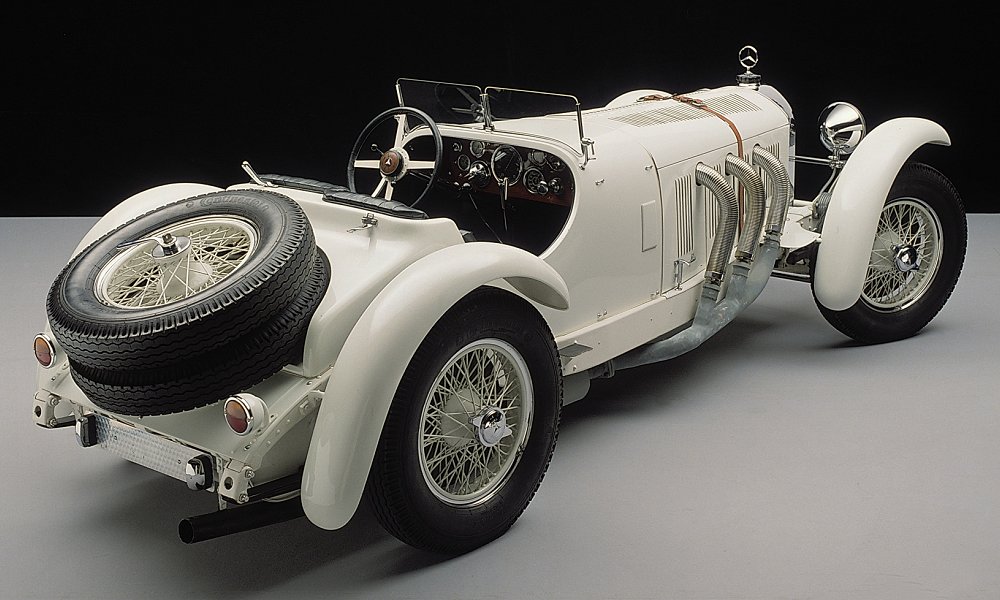
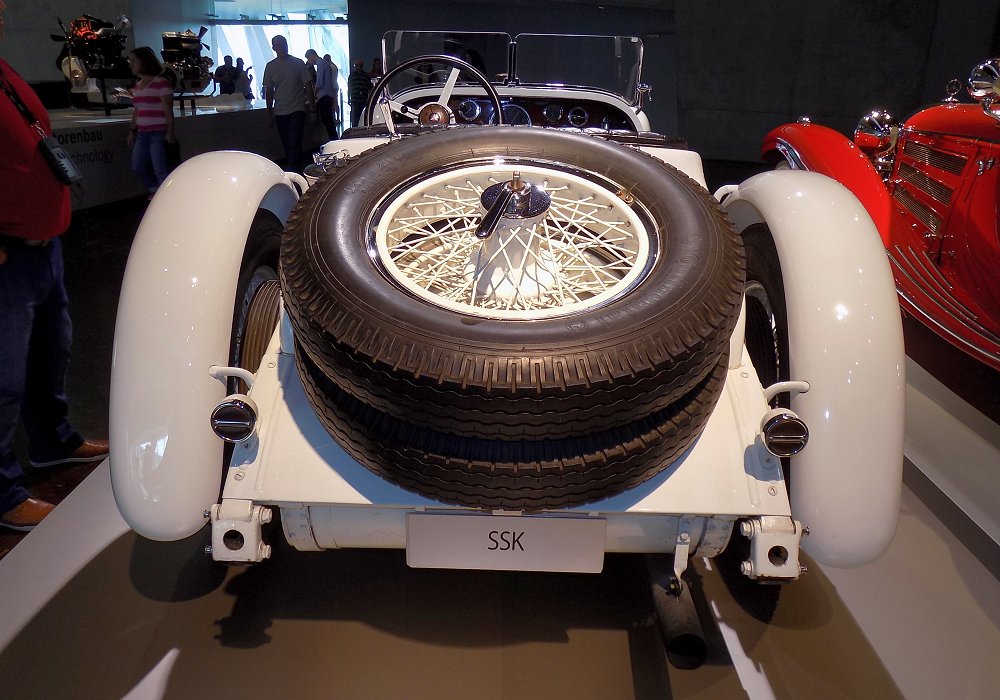
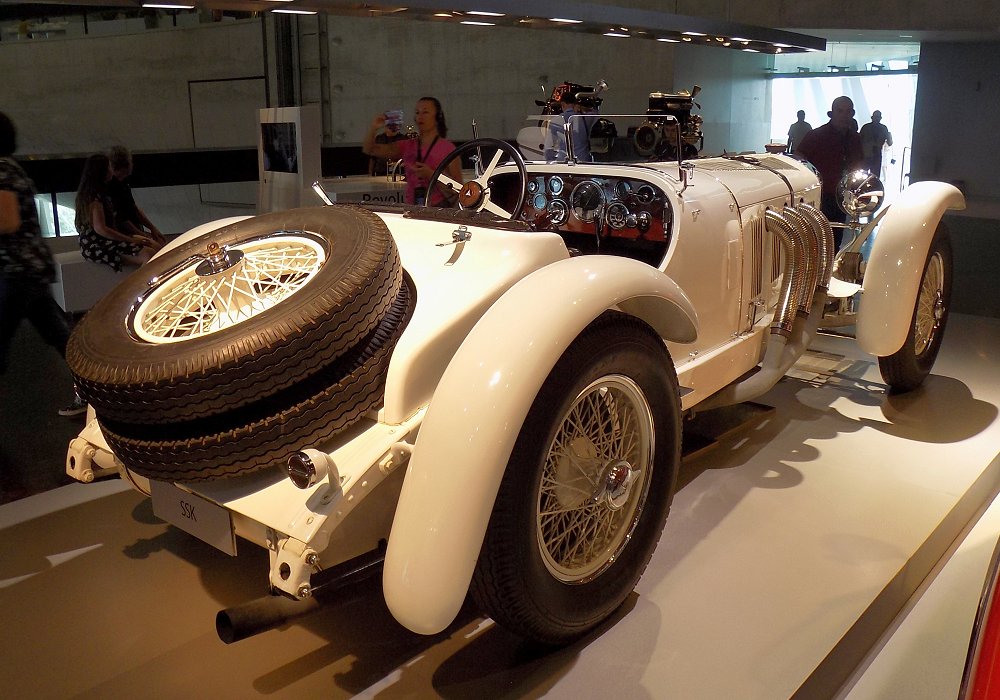
Styling varied depending on the coachbuilder, but most SSK 27/170/225 PS cars followed a stripped-back, purposeful sports-racer aesthetic. The long bonnet dominated the silhouette, with exposed side-exit exhaust pipes signalling the car’s aggressive intent. The cockpit was compact, seating two, with minimal bodywork beyond the scuttle and tail. Wings were narrow and functional, designed to keep weight low. The tail often carried a single external spare wheel, adding to the car’s competition-ready appearance. The simplicity of the bodywork was both practical and symbolic: this was a machine designed for performance, not ornamentation.
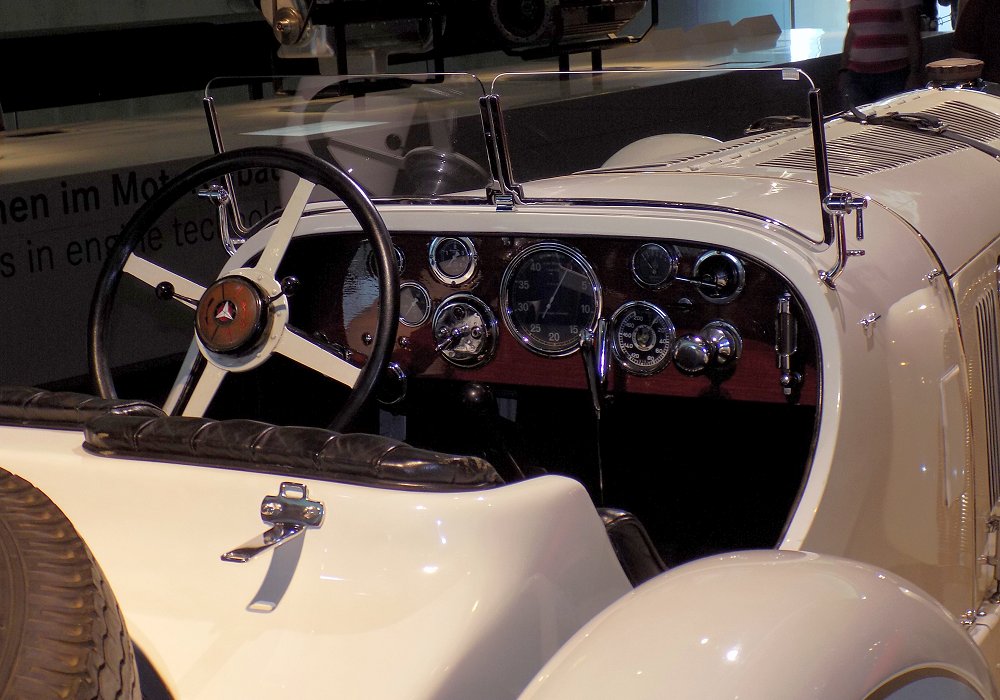
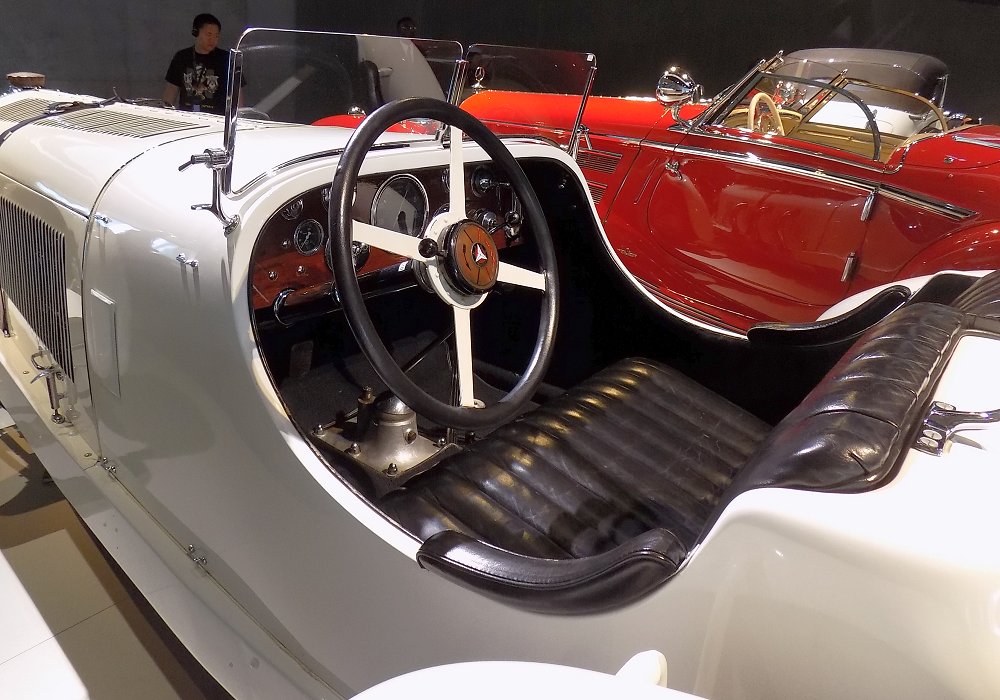
Inside, the car was equally focused. Leather bucket seats offered basic support, the dashboard carried essential gauges for oil pressure, coolant temperature and supercharger indication, and the driving position was designed for control rather than comfort. The steering wheel was large, allowing leverage over the heavy front end, and the long gear lever gave a direct mechanical feel. Everything in the cabin served the needs of the driver in demanding conditions.
On the road, the SSK 27/170/225 PS delivered an intense and exhilarating experience. Without the Kompressor, it behaved as a powerful and torquey grand-touring car. With the supercharger engaged, it transformed instantly into one of the fastest road-legal machines of its era. Acceleration was formidable, the car surged up steep grades with ease, and on open roads it maintained speeds few competitors could approach. The shortened chassis gave it sharper turn-in, though it also made the SSK lively and demanding at the limits. In the hands of an experienced driver, it offered exceptional pace and control; in less experienced hands, it could be unforgiving.
In motorsport, the higher-output SSK variants such as the 27/170/225 PS played a major role in Mercedes’ competition dominance in the late 1920s. Rudolf Caracciola achieved numerous victories in hillclimbs and road races driving SSKs of this specification, gaining the nickname “King of the Mountains.” The car’s blend of power, stamina, braking strength and reliability made it one of the most feared and respected competition machines of its time. Its success paved the way for the even lighter, more radical SSKL, which extended the model’s racing achievements into the early 1930s.
Today, the Mercedes-Benz SSK 27/170/225 PS is regarded as one of the most desirable and historically important sports cars ever built. Its rarity, reputation and technical significance place it at the pinnacle of pre-war automotive achievement. For many enthusiasts and historians, it represents the ultimate expression of Mercedes’ early supercharged philosophy: powerful, uncompromising, dramatically styled and deeply connected to the golden age of European road racing.