Description
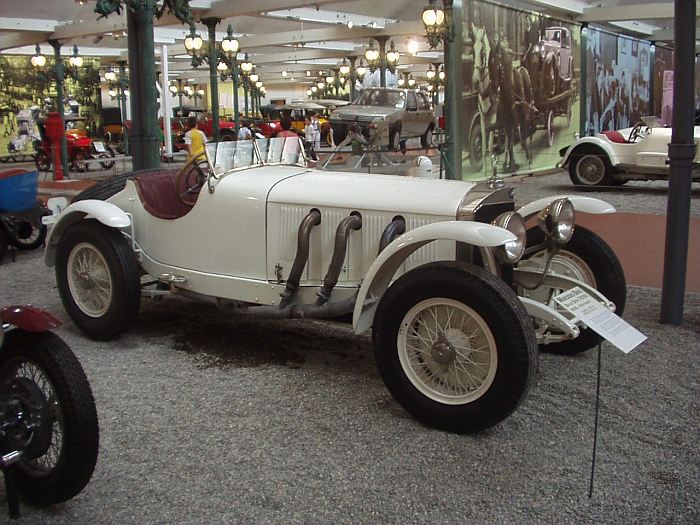
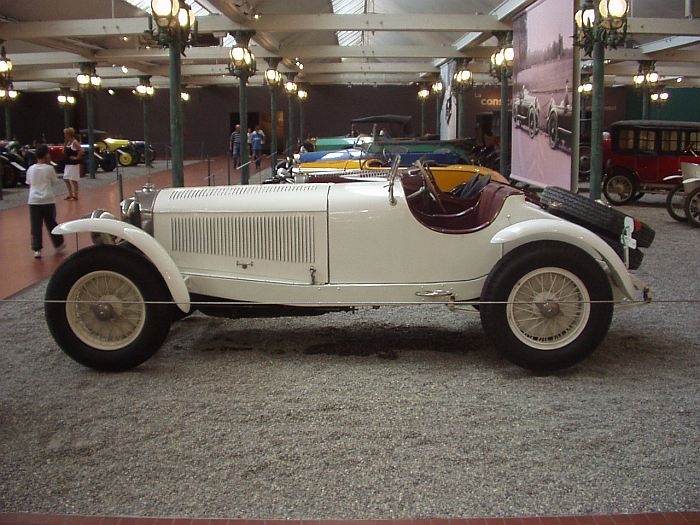
The Mercedes-Benz SSK 720 Biplace Sport was one of the purest and most focused sporting configurations of the legendary SSK line, built at the height of Mercedes’ supercharged performance era in the late 1920s and early 1930s. The designation “720” referred to the engine’s approximate swept volume in decilitres, marking it as part of the 7.1-litre supercharged family. The term “Biplace Sport” identified this version as a stripped, lightweight two-seat body designed with competition and high-speed Alpine driving in mind. It represented the SSK at its most direct, raw and purposeful.
At its core, the SSK 720 Biplace Sport was powered by Mercedes’ famous 7.1-litre inline-six engine with a mechanically driven Roots-type supercharger. In standard running, the engine produced extremely strong torque and around 170 horsepower. When the Kompressor engaged—activated by fully depressing the throttle—the power jumped to well over 220 horsepower depending on individual tuning. This explosive surge was accompanied by a sharp rise in induction noise and the unmistakable supercharger whine that became a signature of the S-Series. The Biplace Sport body, being lighter than most SSK configurations, made full use of this power, delivering exceptional acceleration and race-ready performance.
The chassis was the shortened Kurz frame that defined the SSK—stiffer, shorter and lighter than the SS from which it evolved. By reducing the wheelbase significantly, Mercedes created a machine that was far more agile and responsive, qualities that were essential for hillclimbs and demanding road circuits. The ladder-frame construction was heavily reinforced to cope with the immense torque of the supercharged engine. Suspension was by semi-elliptic leaf springs at both axles, firm and sporting in character. Braking relied on large mechanical drums on all four wheels, among the most capable braking systems of the period, giving the SSK strong stopping power even under sustained high-speed use.
The Biplace Sport body was deliberately minimal, built by specialist coachbuilders to be as light and aerodynamic as possible. The design followed the classic long-bonnet, short-tail profile of the SSK but stripped of unnecessary trim or ornamentation. The two-seat cockpit was positioned far back on the chassis, creating the iconic silhouette dominated by the massive bonnet stretching ahead. The wings were narrow, cut close to the wheels, and the tail was compact and functional. The exposed exhaust pipes running along the side announced the car’s performance character before the engine even started. The overall impression was one of mechanical aggression and competition readiness.
Inside, the SSK 720 Biplace Sport offered a spartan, purposeful environment. Seating was limited to two firm leather bucket seats, designed for support in fast corners rather than comfort on long journeys. The dashboard carried only essential instrumentation—oil pressure, coolant temperature, fuel, speed and supercharger indication—arranged for quick reading in competition. The large four-spoke steering wheel and long, mechanical gear lever connected the driver directly to the car’s heavy-duty components. Every detail served the needs of high-speed driving.
On the road, the SSK 720 Biplace Sport was a thrilling and demanding machine. Even without the supercharger engaged, the car delivered immense torque and impressive speed, making it more than capable for fast touring. Once the Kompressor activated, the character changed completely. Acceleration became dramatic, the exhaust note deepened and the car surged forward with a level of force almost unmatched by contemporaries. The shortened chassis made the SSK extremely agile, but it also required considerable driver skill. It could be lively and challenging at the limit, rewarding experienced drivers with remarkable control and punishing inattention with sudden oversteer. Its firm suspension and powerful brakes made it especially effective on hillclimb routes and tight mountain roads.
The Biplace Sport versions played a significant role in the competition successes of the SSK. Drivers such as Rudolf Caracciola used similarly configured SSKs to dominate hillclimbs and endurance events, earning Mercedes a reputation for producing some of the most formidable performance cars in Europe. The SSK’s blend of light weight, high power and reliability made it a favourite among privateer racers, many of whom ordered the Biplace Sport body for its competitive advantage.
Today, the Mercedes-Benz SSK 720 Biplace Sport is considered one of the most desirable and historically significant pre-war sports cars ever made. Its rarity, uncompromising design and association with the golden age of supercharged German engineering make it an icon. It embodies the essence of the SSK philosophy: immense power, minimal bodywork, mechanical purity and absolute focus on performance. It remains one of the most charismatic and unforgettable sports machines of its era.