Description
The Mercedes-Benz SSK 720 Sport was one of the most focused and high-performance versions of the famous SSK line, embodying the essence of Mercedes’ supercharged engineering during the late 1920s and early 1930s. The “720” designation referred to the engine’s swept volume in decilitres, marking it as part of the formidable 7.1-litre supercharged six-cylinder family. The “Sport” identification signalled a stripped, purposeful configuration tuned for fast road work, Alpine competition and serious drivers who required maximum capability with minimal excess weight.
At the heart of the SSK 720 Sport was Mercedes’ massive inline-six, equipped with a mechanically driven Roots-type Kompressor. In naturally aspirated running the engine produced strong torque and around 170 horsepower. When the supercharger engaged—activated by fully depressing the accelerator pedal—the power surged to well over 220 horsepower depending on individual tuning. The transformation was dramatic: the supercharger’s mechanical whine rose sharply, the induction note deepened and the huge engine delivered a fierce rush of torque. For a car built in the late 1920s, this level of performance placed it among the fastest road-legal machines in the world.
The SSK chassis was defined by its Kurz (short) layout. The wheelbase was significantly reduced compared with the SS, creating a far more agile and responsive car. This shorter ladder-frame, heavily reinforced, was designed to handle the enormous torque loads produced by the supercharged engine. Suspension relied on semi-elliptic leaf springs front and rear, tuned firmly for performance driving. The braking system consisted of large mechanical drum brakes at all four wheels, an essential feature for controlling a car with such dramatic speed potential on both mountain roads and open straights.
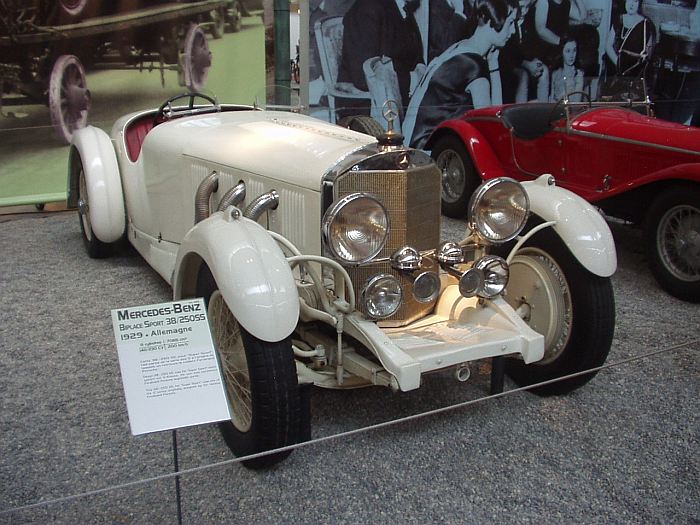
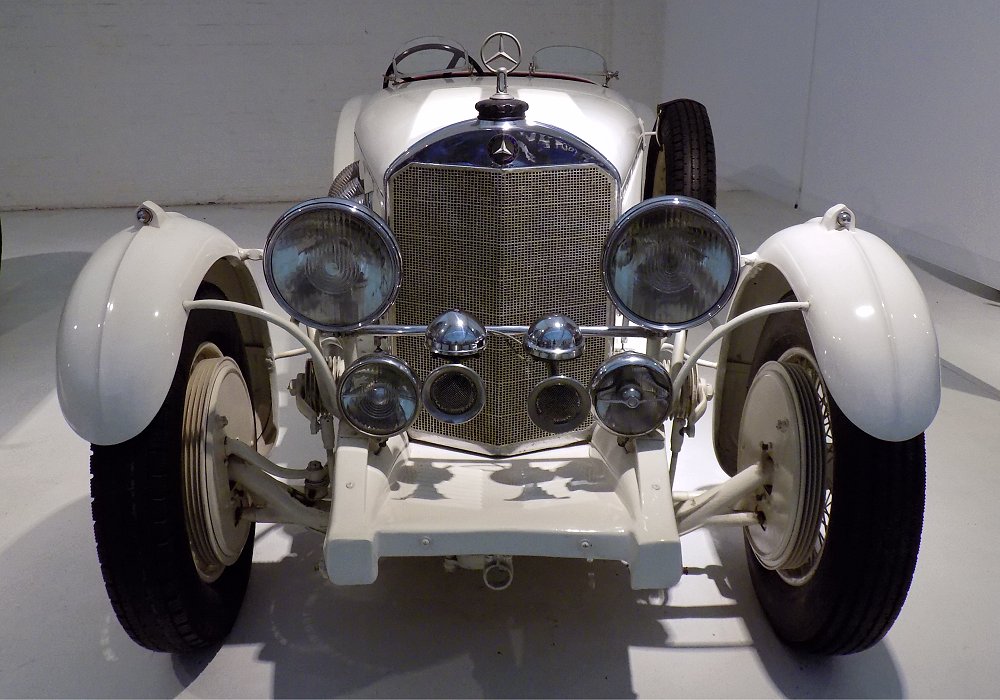
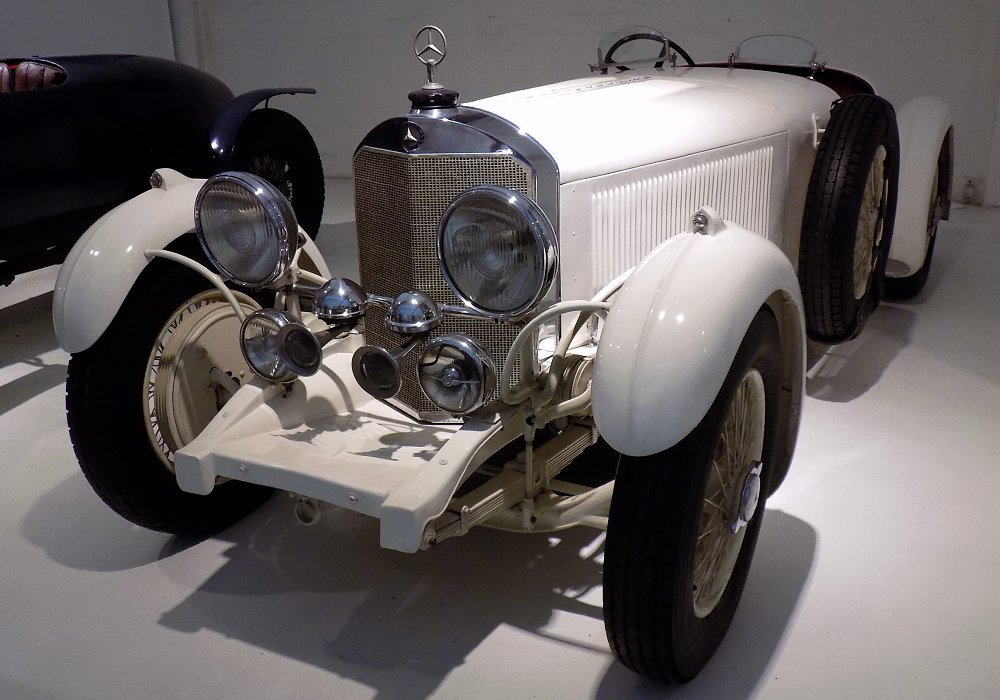
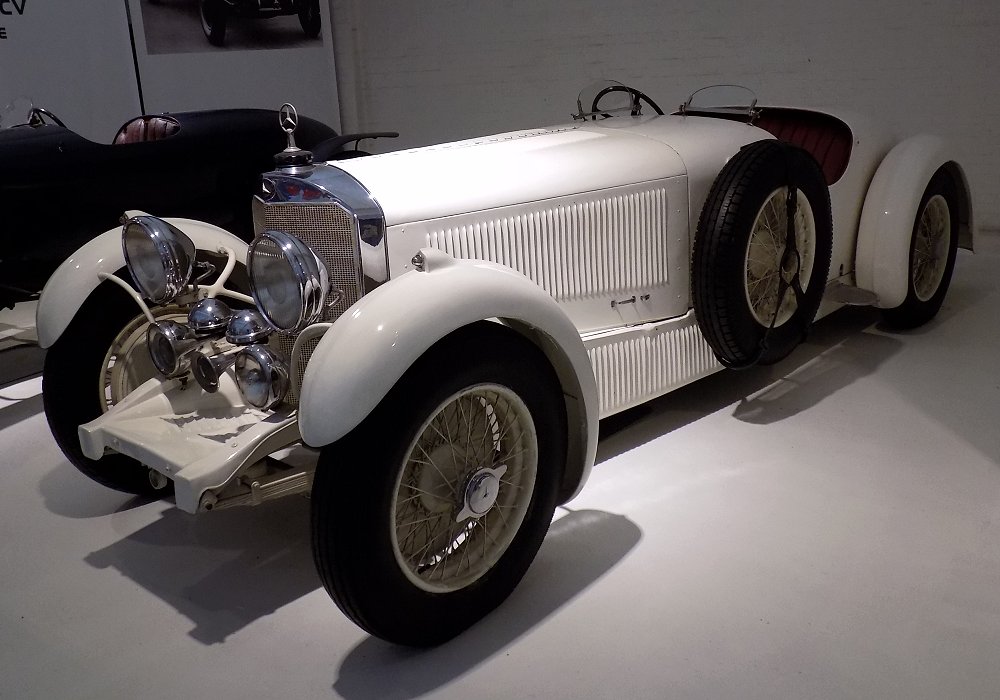
The Sport body was minimal, functional and built with weight reduction in mind. The long bonnet dominated the styling, stretching far ahead of the compact cockpit. Most examples were open two-seat designs with low, simple body sides, narrow wings, a short rear section and exposed mechanical components. The iconic external exhaust pipes running along the flank of the car signalled its supercharged nature and added to its aggressive stance. The proportions were classic SSK: immense bonnet, small cockpit, compact tail and an overall presence of concentrated power.
Inside, the cabin of the SSK 720 Sport was stripped to essentials. Two leather bucket seats were mounted low within the chassis. The dashboard carried a precise set of mechanical gauges arranged for clarity, including oil pressure, coolant temperature, fuel, speed and a Kompressor indicator. The large steering wheel, long gear lever and direct mechanical controls gave the driver an intimate connection to the car’s workings. There was no luxury trim; the aim was to reduce weight and maximise focus.
Driving the SSK 720 Sport was an intense and demanding experience. Even without the supercharger, the car offered huge torque and excellent pace. With the Kompressor engaged, the car accelerated with a brutality that surprised even seasoned drivers of the era. The shortened wheelbase made it quick to turn in, but also made handling lively and unforgiving at the limit. In skilled hands, however, the car offered extraordinary performance, especially on mountain passes where the combination of power, engine braking, strong mechanical brakes and low weight made it devastatingly effective.
The SSK 720 Sport played an important role in Mercedes’ competition successes of the period. Variants of similar specification were used by Rudolf Caracciola and other prominent drivers to win hillclimbs and road events, including major Alpine competitions. The model’s blend of speed, reliability and stamina established Mercedes as a dominant force in pre-war performance motoring and directly contributed to the evolution of the even lighter, more extreme SSKL that followed.
Today, the Mercedes-Benz SSK 720 Sport is regarded as one of the most desirable and historically important supercharged sports cars of the pre-war era. Its rarity, its association with the golden age of mechanical engineering and its raw, uncompromising driving character make it one of the most sought-after classic performance machines in the world. It stands as a symbol of the SSK philosophy: extreme power, minimal bodywork, mechanical purity and a driving experience unlike anything else of its time.