Description
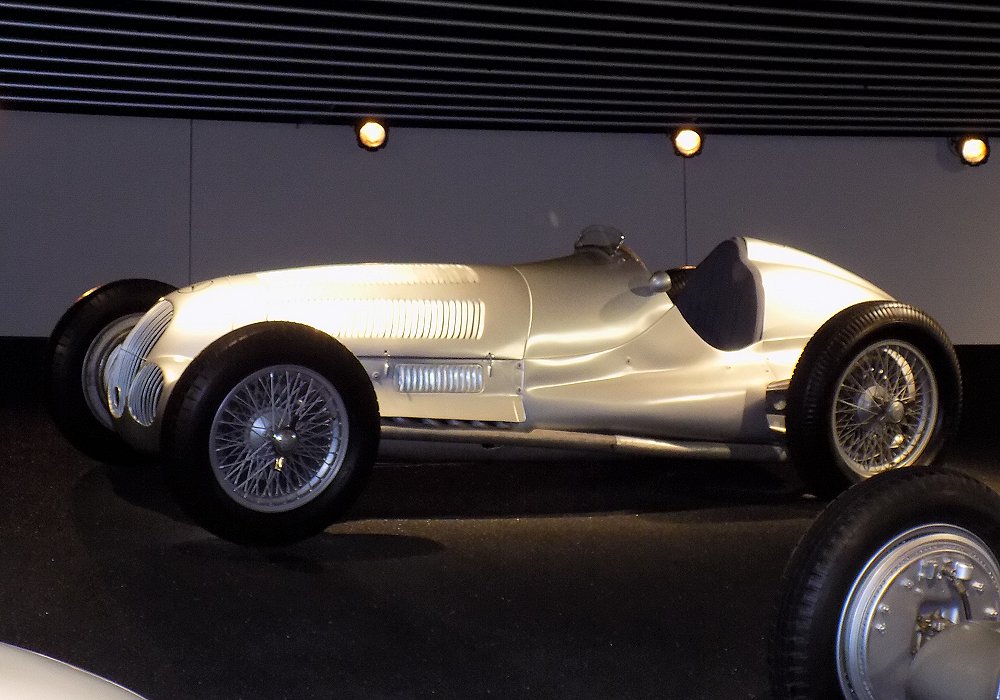
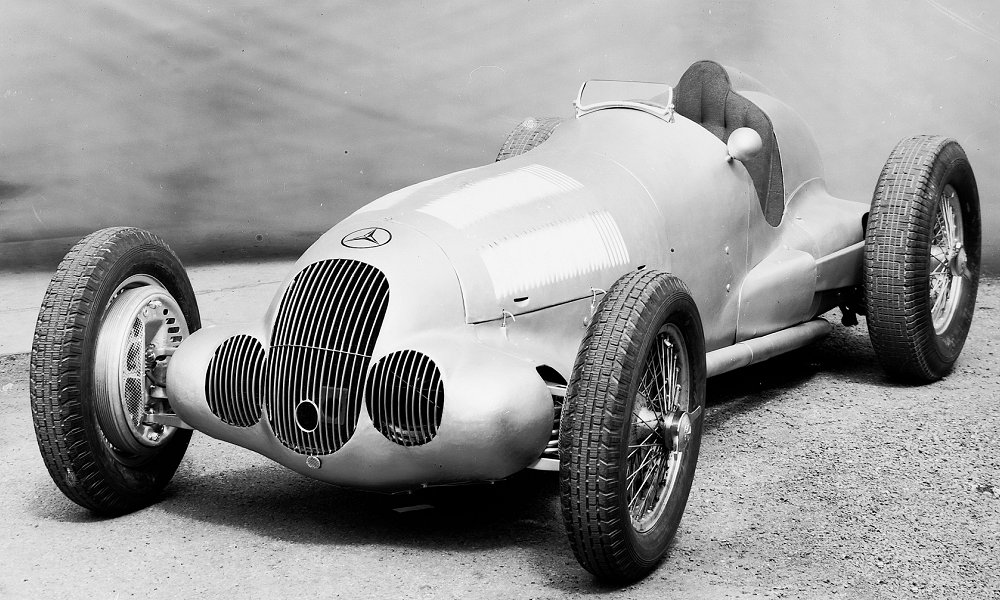
The Mercedes-Benz W125 was one of the most powerful and dominant Grand Prix racing cars ever built, representing the absolute peak of the pre-war Silver Arrow era. Introduced for the 1937 Grand Prix season, it was developed to exploit the final year of the 750-kilogram formula, a regulation that limited only the weight of the car while placing no restriction on engine capacity or power. Mercedes-Benz used this freedom to create a machine of unprecedented performance, one that would remain unmatched in terms of raw power for decades.
At the heart of the W125 was a supercharged inline-eight engine with a displacement of 5.66 litres. Equipped with a large Roots-type supercharger, the engine produced approximately 595 horsepower in race trim, with even higher outputs achieved in certain configurations. This figure was extraordinary not only for the 1930s but by any standard, exceeding the power of Formula One cars well into the turbo era of the 1980s. The engine delivered immense torque, allowing explosive acceleration and staggering top speeds, particularly on fast circuits. Power was transmitted through a four-speed manual gearbox, and managing the engine’s output required exceptional skill and restraint from the driver.
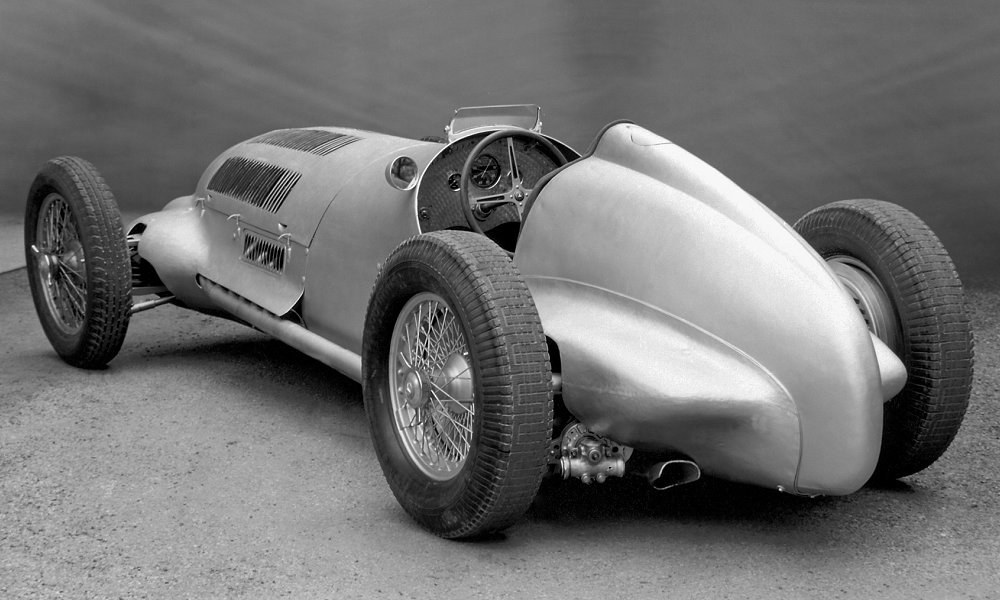
The chassis of the W125 was a lightweight tubular spaceframe designed to meet the strict weight limit while coping with enormous power and stresses. Suspension featured independent front wheels with coil springs and a rear swing-axle layout, a configuration that offered high-speed stability but could be unpredictable at the limit. To help counteract this, Mercedes engineers introduced a unique rear suspension system incorporating a transverse leaf spring and later a De Dion-style arrangement in experimental forms. Braking was handled by large drum brakes, which were heavily taxed by the car’s speed and weight transfer but represented the best available technology of the time.
Aerodynamics played an increasingly important role in the W125’s performance. The bodywork was sleek and purposeful, with smooth aluminium panels tightly wrapped around the chassis to reduce drag. While most versions ran in traditional open-wheel form, fully streamlined bodies were also developed for high-speed events, pushing top speeds to astonishing levels. The combination of massive power and refined aerodynamics made the W125 capable of exceeding 300 km/h on suitable circuits, a figure that placed it far beyond its contemporaries.
The cockpit of the W125 was austere and physically demanding. Drivers sat low in the chassis, surrounded by heat, noise and vibration from the supercharged engine. Steering was heavy and unassisted, brakes required immense effort, and throttle control was critical, as even small inputs could unleash overwhelming power. There were no driver aids of any kind, and the swing-axle rear suspension could produce sudden oversteer if mishandled. Driving the W125 was a test of strength, courage and precision.
On the track, the Mercedes-Benz W125 was virtually unbeatable. During the 1937 season it achieved overwhelming dominance, winning the majority of major European Grands Prix. Driven by legends such as Rudolf Caracciola, Hermann Lang and Manfred von Brauchitsch, the car established Mercedes-Benz as the supreme force in Grand Prix racing. Caracciola, in particular, used the W125 to secure the European Championship, cementing both his reputation and the car’s place in history. The sheer performance advantage of the W125 often rendered strategy secondary, as few rivals could match its pace.
Despite its success, the W125 also highlighted the growing dangers of unchecked power. Tyres, brakes and suspensions were pushed beyond their limits, and racing speeds were becoming increasingly hazardous on circuits that lacked adequate safety measures. As a result, governing bodies recognised that the 750-kilogram formula had reached an unsustainable extreme. For 1938, new regulations imposed strict engine capacity limits, effectively ending the era that had made the W125 possible.
The Mercedes-Benz W125 stands today as one of the greatest racing cars ever constructed. It represents the zenith of pre-war Grand Prix engineering, a machine built without compromise in pursuit of speed and dominance. Its power output remains legendary, and for many years it held the distinction of being the most powerful Grand Prix car ever raced. As both a technical achievement and a symbol of the Silver Arrow era, the W125 occupies a unique and untouchable place in motorsport history.