Description
The Mercedes-Benz W125 Rekordwagen was a specialised high-speed record car derived from the formidable W125 Grand Prix machine, created to demonstrate the ultimate performance potential of pre-war Mercedes-Benz engineering. Built in 1938, the Rekordwagen was designed specifically for absolute speed records on public roads, not for circuit racing. It became one of the fastest cars of its era and remains one of the most extraordinary land-speed machines ever constructed.
At its core, the W125 Rekordwagen used a highly developed version of the W125’s supercharged inline-eight engine. Displacement was 5.66 litres, and with a large Roots-type supercharger operating at high boost, the engine produced well over 700 horsepower in record configuration. This immense output far exceeded that of the standard Grand Prix car and was achieved through higher boost pressure, specialised fuel mixtures and extensive internal strengthening. Power delivery was brutally direct, optimised for sustained full-throttle operation rather than drivability. A specially geared transmission was fitted to allow the car to reach extreme top speeds on long, straight road sections.
The chassis was based on the W125 tubular frame but reinforced and adapted for straight-line stability rather than cornering. Suspension was stiffened considerably, as the Rekordwagen was intended to run on smooth, closed public roads rather than race circuits. Steering geometry and weight distribution were optimised to keep the car stable at speeds far beyond those encountered in Grand Prix racing. Braking capability was of secondary importance, as record attempts were planned with long run-off distances and controlled deceleration zones.
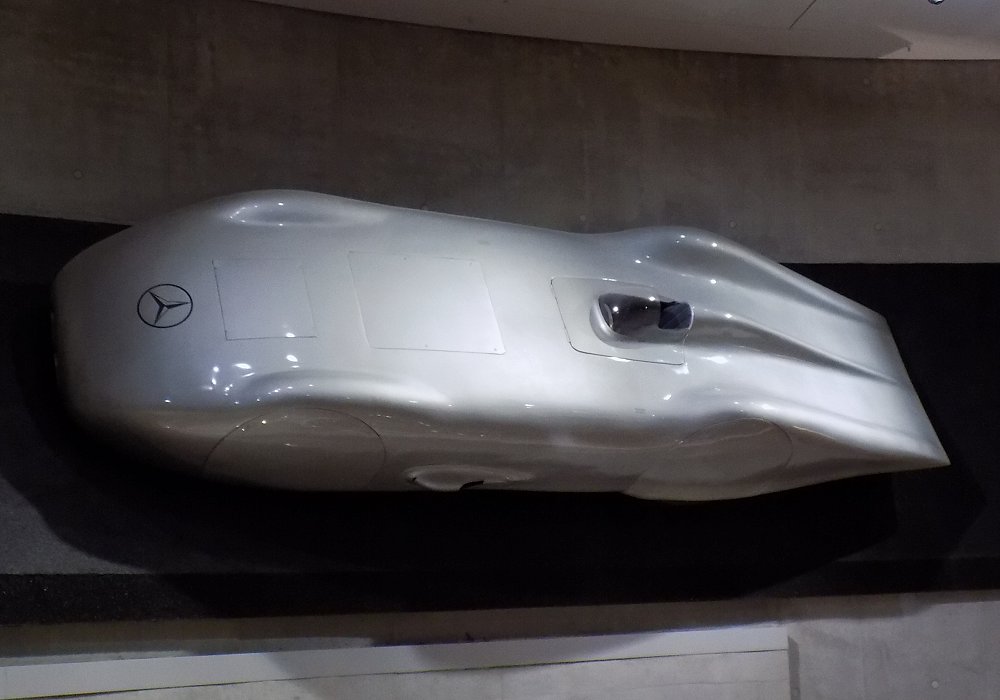
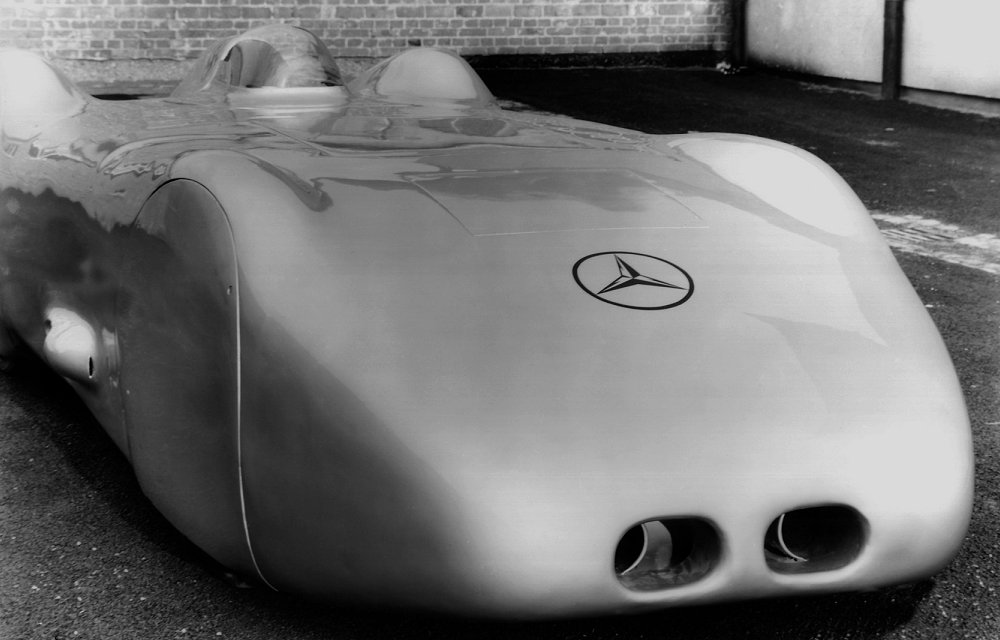
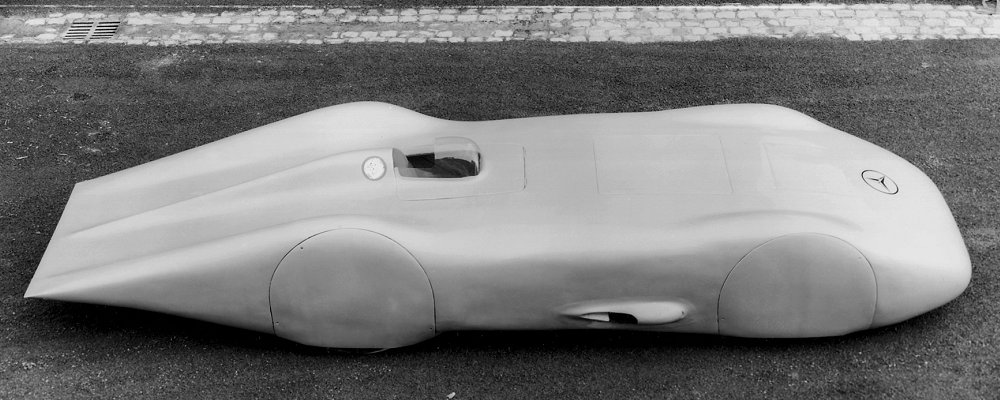
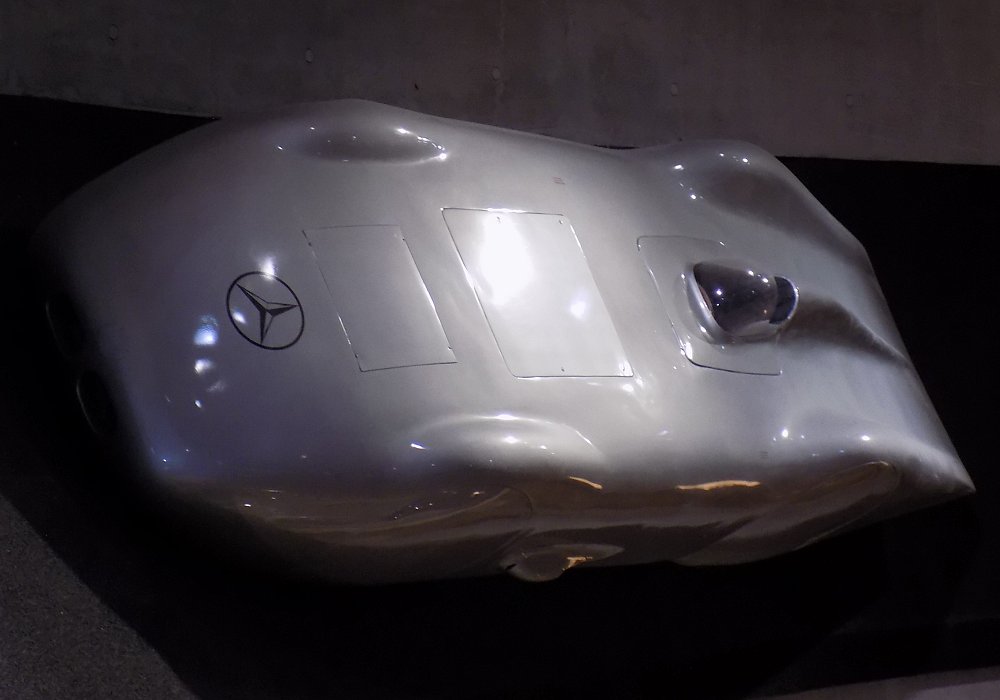
The most striking feature of the W125 Rekordwagen was its fully enclosed aerodynamic body. Unlike the open-wheel W125 race cars, the Rekordwagen was covered by an elongated, teardrop-shaped aluminium shell designed to minimise drag to an extreme degree. The body enclosed the wheels completely, featured a very small cockpit opening and tapered sharply at the rear to reduce turbulence. Every surface was shaped with airflow in mind, drawing heavily on contemporary aviation research. Cooling openings were minimal and carefully positioned, reflecting the car’s singular purpose of reducing aerodynamic resistance.
The driver sat deep within the streamlined body in an extremely confined cockpit. Visibility was limited, ventilation was poor and heat buildup from the supercharged engine was severe. Instrumentation was minimal, focused only on essential engine and speed monitoring. Driving the Rekordwagen required extraordinary courage, as the car was capable of speeds far beyond 400 km/h on narrow public roads with little margin for error and no modern safety equipment.
The W125 Rekordwagen achieved its place in history on 28 January 1938, when Rudolf Caracciola drove it on a closed section of the Frankfurt–Darmstadt autobahn. During this run, the car reached a two-way average speed of 432.7 km/h, setting a new world land speed record for a car driven on a public road. In the same session, Caracciola also recorded a flying kilometre speed of over 432 km/h and a flying mile of approximately 432.9 km/h. These figures remain unmatched by any other car using a public road rather than a purpose-built salt flat or test track.
Tragically, the record day was also marked by danger. During a parallel attempt, rival Auto Union driver Bernd Rosemeyer was killed in a high-speed accident, underlining the extreme risks involved in such record runs. The event effectively ended further public-road speed record attempts of this nature.
The Mercedes-Benz W125 Rekordwagen was never intended for further development or competition. It was a single-purpose machine, built to make a definitive statement about Mercedes-Benz’s engineering supremacy. With the tightening of regulations and the looming onset of war, projects of this scale and risk were soon abandoned.
Today, the W125 Rekordwagen is regarded as one of the most astonishing vehicles ever built. It represents the absolute outer limit of pre-war automotive performance, combining immense supercharged power with advanced aerodynamics decades ahead of their time. As a historical artifact, it stands not only as a record-breaking machine but as a symbol of an era when engineering ambition, national prestige and human bravery converged at unimaginable speeds.