Description
The Mercedes-Benz W25 was the car that marked Mercedes-Benz’s dramatic return to Grand Prix racing in the mid-1930s and became the machine that gave birth to the legend of the Silver Arrows. Introduced for the 1934 racing season, the W25 was developed in response to the new 750-kilogram Grand Prix formula, which limited car weight but imposed no restrictions on engine capacity. Within this framework, Mercedes-Benz created a technically advanced, immensely powerful racing car that immediately re-established Germany as a dominant force in international motor racing.
At the heart of the W25 was a supercharged inline-eight engine, initially displacing 3.36 litres and later enlarged to as much as 4.74 litres as development progressed. Power output evolved rapidly, beginning at around 354 horsepower and eventually exceeding 430 horsepower in later versions. A Roots-type supercharger provided enormous torque and acceleration, giving the W25 a decisive advantage over many of its rivals. Power was transmitted through a four-speed manual gearbox, and the engine’s brutal delivery demanded both strength and finesse from the driver, particularly on narrow and poorly surfaced circuits typical of the era.
The chassis of the W25 was a lightweight tubular frame designed to meet the strict weight limit while maintaining sufficient rigidity to handle the car’s immense power. Suspension was advanced for its time, using independent front suspension with coil springs and a rear swing-axle layout. This configuration allowed higher speeds through corners but could be unpredictable at the limit, requiring exceptional skill to control. Braking was handled by large drum brakes, which, while powerful, were heavily stressed during long races due to the car’s speed and weight transfer.
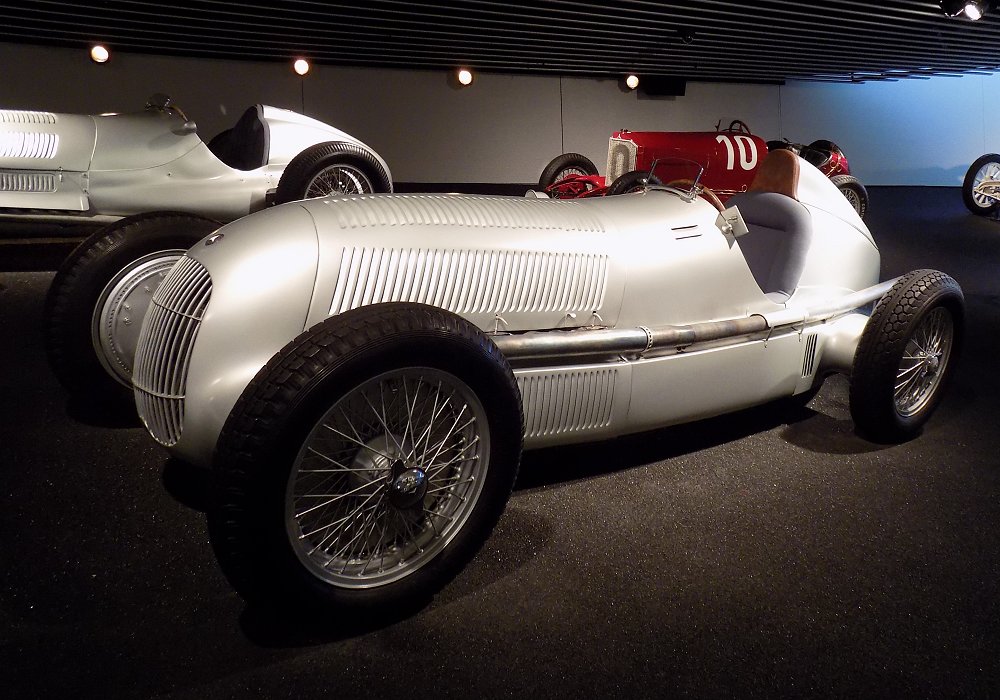
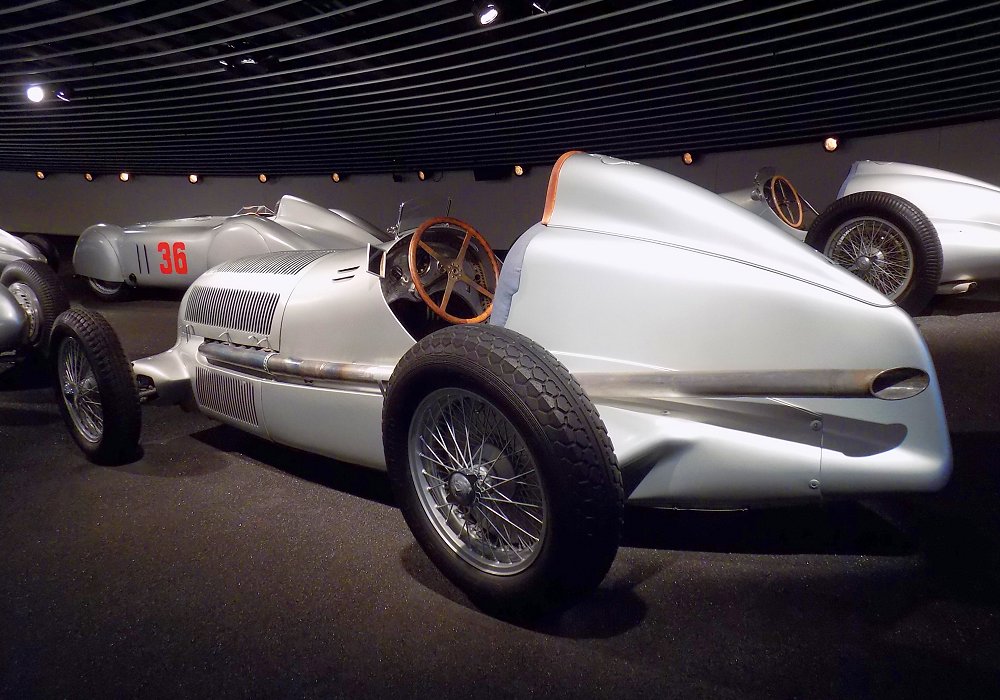
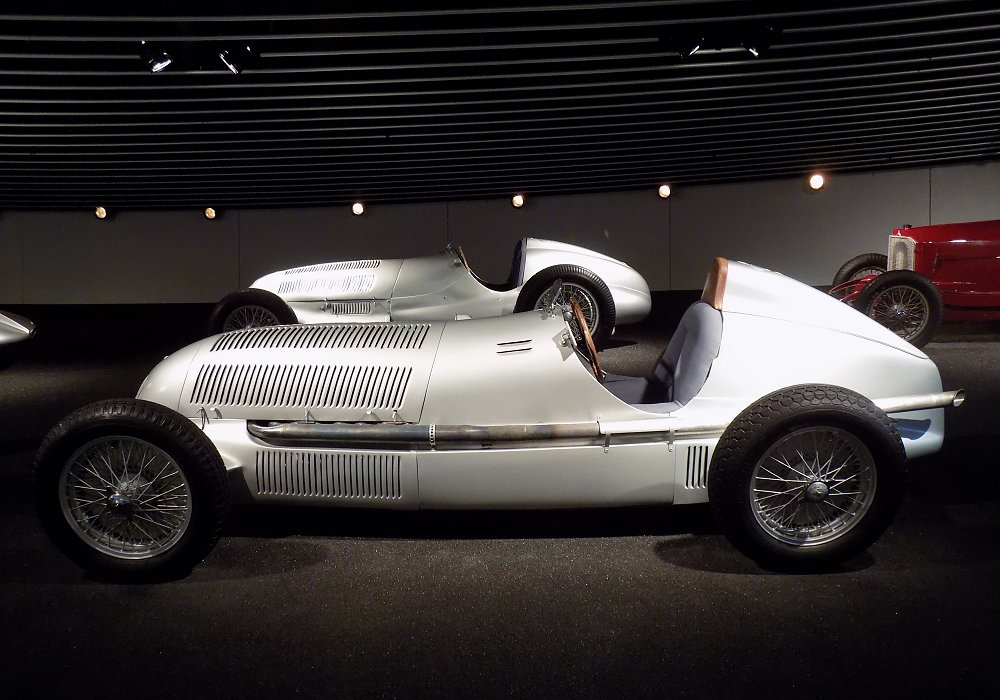
The bodywork of the W25 was simple, functional and aerodynamic by contemporary standards. It was shaped to minimise drag and reduce weight, with smooth aluminium panels wrapped tightly around the chassis. Early in the 1934 season, Mercedes-Benz removed the traditional white paint associated with German racing cars in order to meet the weight limit, revealing the bare aluminium body beneath. This unpainted finish gave the car its distinctive silver appearance and led to the nickname “Silberpfeile,” or Silver Arrows, a name that would become inseparable from Mercedes-Benz racing history.
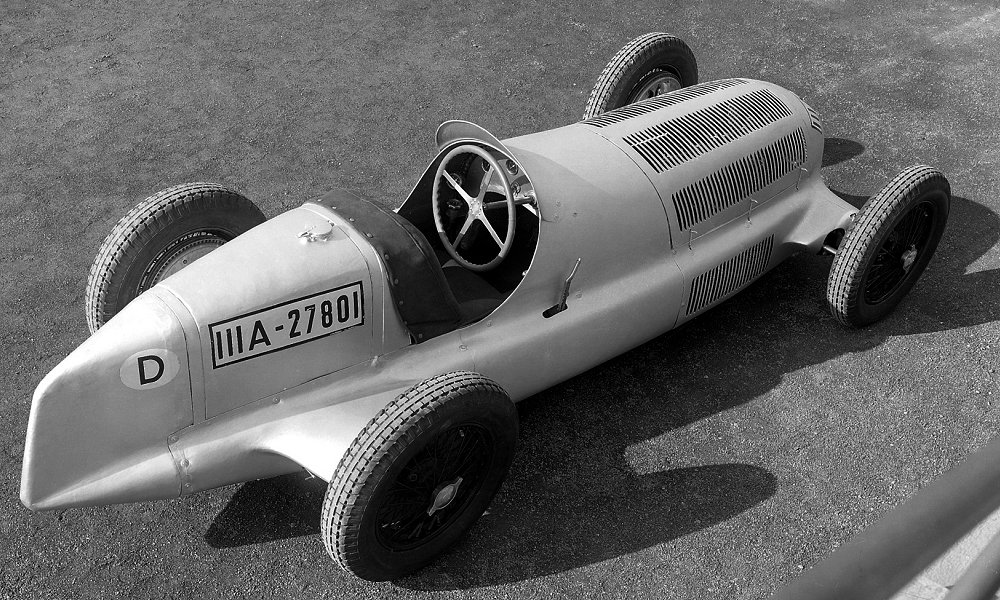
Inside the cockpit, the W25 was stark and uncompromising. The driver sat low and close to the rear axle, surrounded by exposed mechanical components and minimal instrumentation. Controls were heavy and required constant physical effort, particularly the steering, which had no assistance and transmitted every movement of the front wheels directly to the driver. The heat from the supercharged engine, combined with the noise and vibration, made driving the W25 a punishing experience over race distances.
On the track, the Mercedes-Benz W25 proved devastatingly effective. From its debut in 1934, it achieved immediate success, securing victories in major European Grands Prix. The car was driven by some of the greatest drivers of the era, including Rudolf Caracciola, Manfred von Brauchitsch and Luigi Fagioli. Its combination of straight-line speed, engineering sophistication and factory backing allowed Mercedes-Benz to dominate much of Grand Prix racing in the mid-1930s, particularly in the hands of Caracciola, who became synonymous with the Silver Arrows.
Despite its success, the W25 was not without flaws. Its handling characteristics could be treacherous, especially as engine outputs increased. The swing-axle rear suspension could cause sudden oversteer, and the enormous power made throttle control critical. These challenges pushed Mercedes-Benz engineers to continually refine the design, leading directly to the development of the W125, which would replace the W25 and become even more dominant.
The Mercedes-Benz W25 occupies a foundational place in motorsport history. It was the car that launched the Silver Arrow era, redefined the technical limits of Grand Prix racing and demonstrated Mercedes-Benz’s ability to translate engineering ambition into competitive success. Today, the W25 is remembered not only for its victories but for what it symbolised: the rebirth of Mercedes-Benz as a racing powerhouse and the beginning of one of the most famous chapters in the history of motor racing.