Description
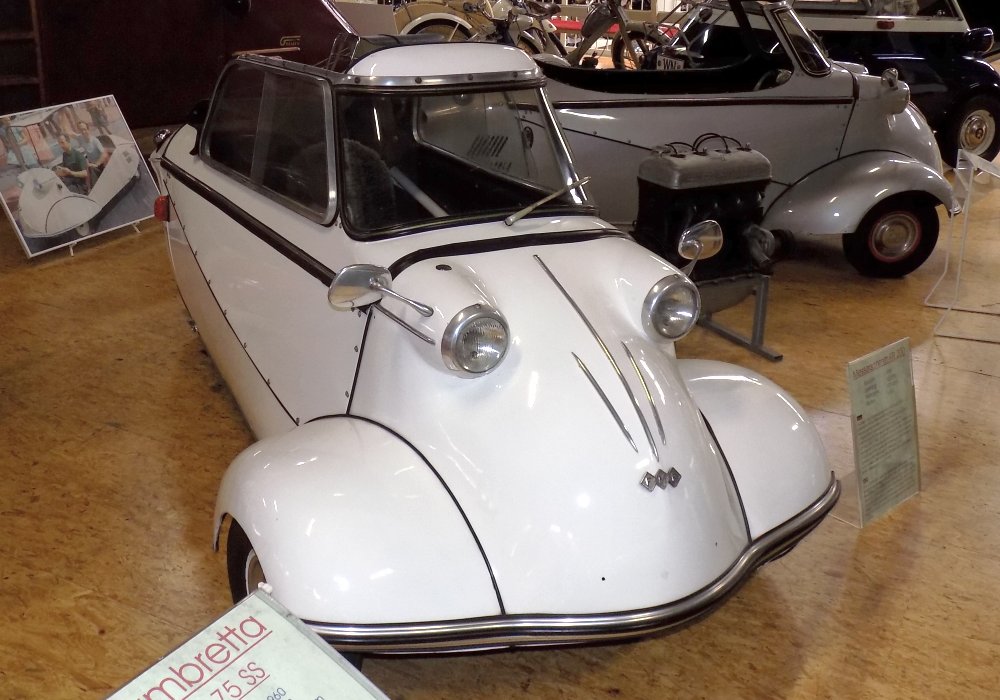
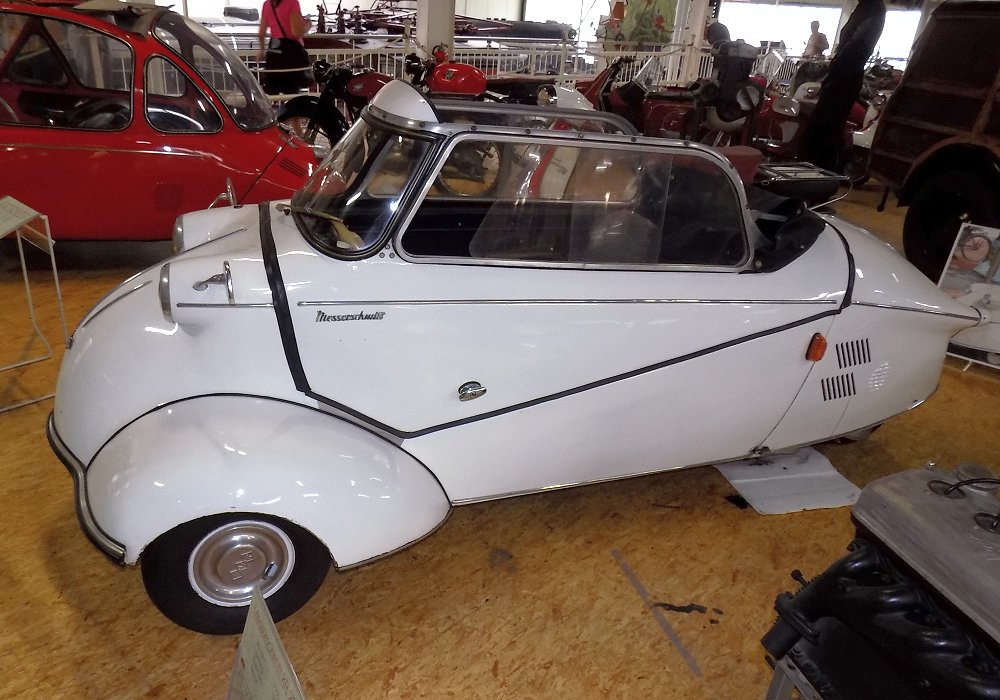
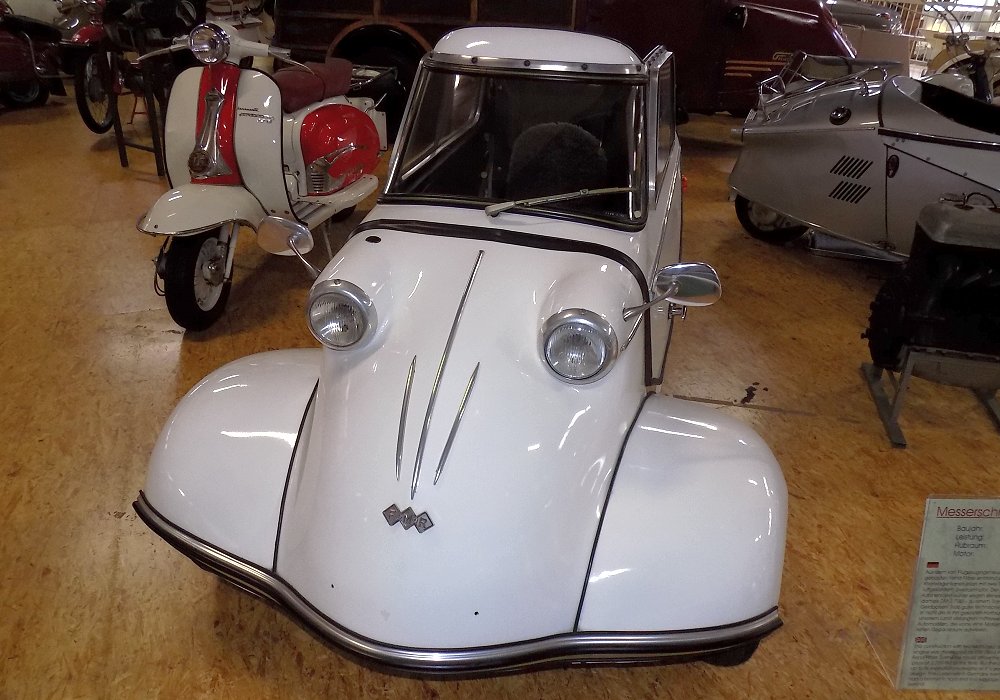
The Messerschmitt KR 200 Cabriolet was a distinctive open-top variant of the famous KR 200 Kabinenroller, produced during the late 1950s and early 1960s. While the standard KR 200 was best known for its bubble canopy, the Cabriolet version replaced this aircraft-style dome with a fixed windscreen and folding fabric roof, giving the tiny microcar a more conventional and practical appearance.
Like the standard KR 200, the Cabriolet was developed in post-war West Germany at a time when economical personal transport was in high demand. Messerschmitt, originally an aircraft manufacturer, applied aviation-inspired engineering principles to create a lightweight and efficient vehicle. The narrow body, tandem seating arrangement and minimal dimensions reflected a design focused on economy and simplicity.
Power came from a rear-mounted single-cylinder, two-stroke engine of approximately 191 cc. Despite its small size, the lightweight construction allowed the KR 200 Cabriolet to achieve modest but practical performance for urban and short-distance travel. A four-speed manual transmission was fitted, and in many versions, reverse was achieved by reversing the engine’s rotation rather than through a separate gear.
The Cabriolet differed visually from the bubble-canopy version by adopting a fixed windscreen with side windows and a folding soft top. This configuration improved everyday usability and ventilation while maintaining the compact proportions of the original design. Entry was easier than in the canopy-equipped models, as occupants could simply open the side-hinged door rather than lifting the entire dome.
The chassis consisted of a tubular steel frame supporting lightweight body panels. The three-wheel layout, with two wheels at the front and a single driven wheel at the rear, kept manufacturing costs low while providing greater stability than a motorcycle. Suspension was simple but effective for the car’s intended use.
Inside, seating remained in tandem configuration, with the driver at the front and a passenger directly behind. Controls were minimal and straightforward, reflecting the vehicle’s utilitarian purpose. The focus was on functional mobility rather than comfort or luxury.
The Messerschmitt KR 200 Cabriolet offered buyers a slightly more conventional aesthetic while retaining the economy and ingenuity of the Kabinenroller concept. Although less visually dramatic than the bubble-top version, it provided practical advantages that appealed to certain customers.
Today, the KR 200 Cabriolet is regarded as a rare and charming example of 1950s microcar engineering. Its compact size, simple mechanics and unique character make it highly collectible. As a historical vehicle, it represents an innovative response to economic constraints and stands as a testament to the creative engineering solutions of post-war Europe.