Description
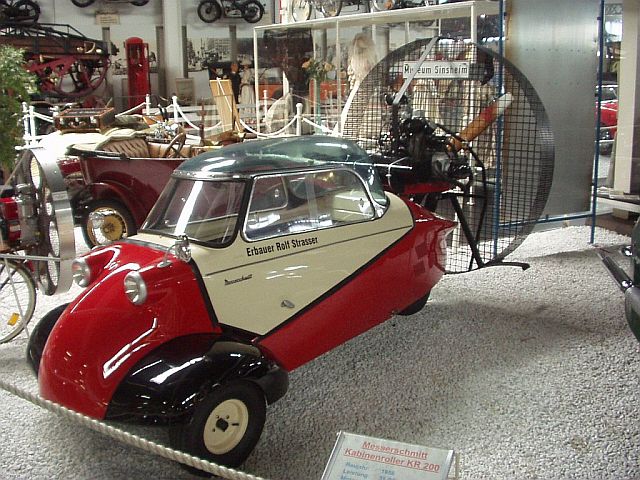
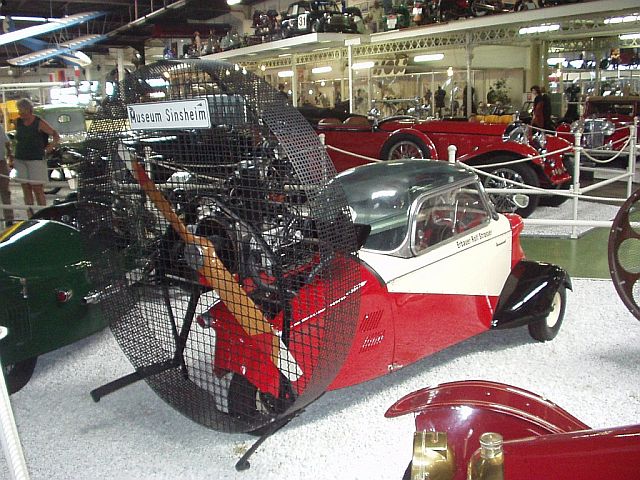
The Messerschmitt KR 200 Luftschraube was a special promotional and experimental variant of the KR 200 Kabinenroller, created to highlight the company’s aviation heritage and engineering creativity. The term “Luftschraube” translates to “air screw” or propeller, a clear reference to Messerschmitt’s origins as an aircraft manufacturer.
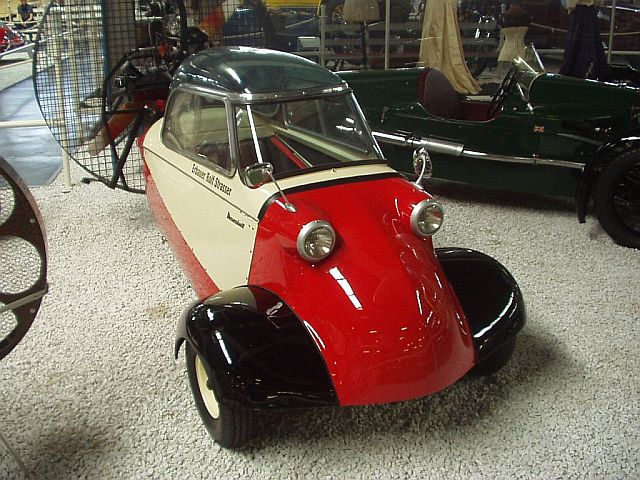
Based on the standard KR 200, the Luftschraube retained the narrow, tandem-seating layout and distinctive bubble canopy that defined the Kabinenroller line. The basic structure remained a lightweight tubular steel frame with body panels mounted over it, and the three-wheel configuration with two wheels at the front and a single driven wheel at the rear was unchanged.
Mechanically, the Luftschraube used the familiar rear-mounted single-cylinder, two-stroke engine of approximately 191 cc. A four-speed manual transmission was fitted, and as with other KR 200 models, reverse was achieved by reversing the direction of engine rotation. Performance remained similar to the standard KR 200, with modest but practical speed and efficiency for urban use.
What distinguished the Luftschraube was its thematic emphasis on aviation. In certain promotional contexts, the vehicle was displayed or modified to visually reinforce its aircraft inspiration, sometimes featuring propeller imagery or experimental concepts that underscored Messerschmitt’s aeronautical background. The bubble canopy itself already resembled a fighter aircraft cockpit, and the Luftschraube concept leaned heavily into that association.
The KR 200 Luftschraube was not a mainstream production variant in the same way as the Super or Cabriolet models. Instead, it represented a creative expression and marketing tool, reinforcing the connection between the company’s aircraft engineering expertise and its microcar designs.
Today, the Messerschmitt KR 200 Luftschraube is regarded as a rare and unusual chapter in Kabinenroller history. Its strong aviation theme and limited presence make it particularly interesting to collectors and historians. As a historical concept, it highlights how Messerschmitt blended branding, engineering identity and innovation during the post-war period, transforming aircraft-inspired ideas into one of the most recognisable microcars ever built.